What Age Should Men Get a PSA Test? Guidelines Compared
Affiliate disclosure: some links on this site are affiliate links. If you buy through them we may earn a commission at no extra cost to you. That never changes what the research says, and we publish negative findings about products we link to. This article is informational and is not medical advice.
Most guidelines put the first PSA conversation between ages 45 and 55. The AUA (2023, amended 2026) allows a first PSA test at 45 to 50.3 The American Cancer Society says 50, or 45 for higher-risk men.4 The U.S. Preventive Services Task Force (2018) leaves it to men 55 to 69 and advises against screening at 70 and older.1
Key takeaways
- The USPSTF recommendation still in force dates from 2018: an individual decision at 55 to 69, no screening at 70 and older. Its update page says "in progress" and was last updated December 21, 2023, when the final research plan was posted. No draft recommendation was posted as of September 2026.1,2
- The urologists' guideline (AUA/SUO, amended February 2026) allows a baseline PSA at 45 to 50 and says higher-risk men should be offered screening from 40 to 45.3
- A newly high PSA goes back to normal on a repeat test in 25% to 40% of men, which is why the AUA says to repeat it before any scan or biopsy.3
- Finasteride and dutasteride cut PSA by about 50%. The FDA labels say to double the result before comparing it with normal ranges.7,8
- Only about 25% of men who get a biopsy for a high PSA turn out to have prostate cancer, according to the National Cancer Institute.5
The major U.S. guidelines agree on more than the headlines suggest. They differ on when to start, how often to repeat and when to stop. This page puts the three open guidelines side by side, with the year of each, then covers what moves a PSA number that has nothing to do with cancer. If you are here because of urinary symptoms, the PSA test is only one piece of that workup; our guide to enlarged prostate symptoms covers the rest.
What does a PSA test actually measure?
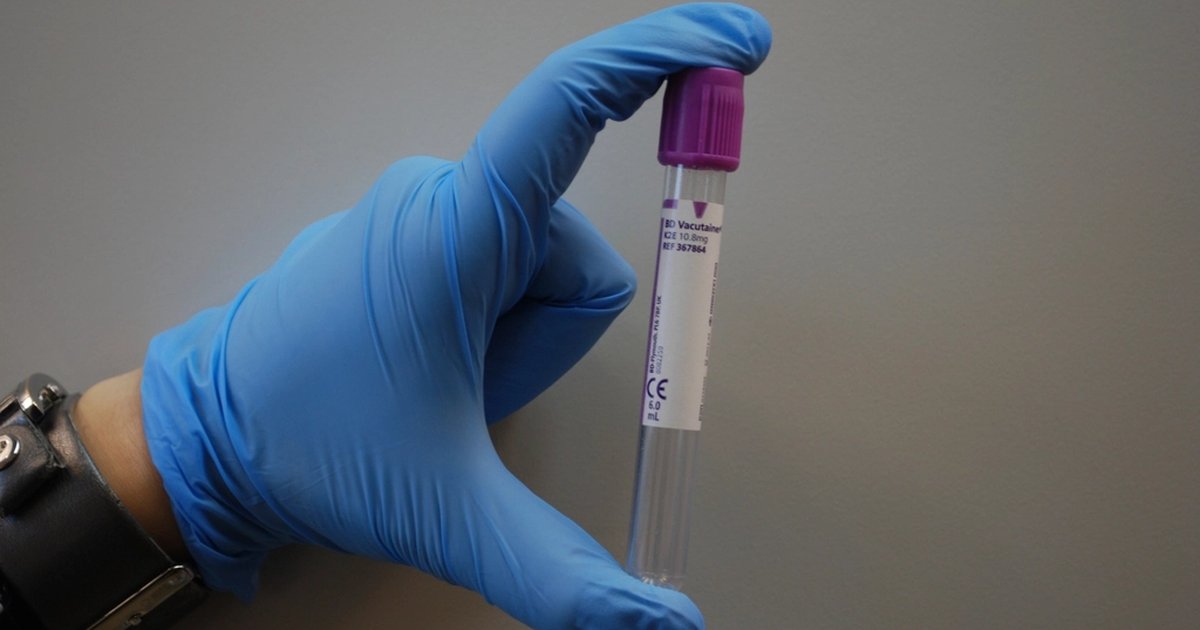
PSA (prostate-specific antigen) is a protein made by normal prostate cells as well as by cancer cells. The test is a simple blood draw. The National Cancer Institute is clear on the main limit: "Both prostate cancer and several benign conditions (particularly benign prostatic hyperplasia, or BPH, and prostatitis) can cause PSA levels in the blood to rise."5
There is also no single cutoff. The NCI says "there is no specific PSA level that means that someone has prostate cancer." A level above 4.0 ng/mL has traditionally been called abnormal, but some doctors use a lower cutoff such as 2.5 ng/mL for younger men and a higher one such as 5 ng/mL for older men.5 MedlinePlus adds the other side: "It's possible to have a high PSA without prostate cancer, or a low PSA with prostate cancer."6
For scale, the AUA guideline reports that typical PSA values are low in midlife: a median of about 0.4 to 0.7 ng/mL for men in their 40s and 0.7 to 1 ng/mL in their 50s.3 Your first result is most useful as a personal baseline to compare against later.
What age should men get a PSA test? The guidelines side by side
Here are the three U.S. guidelines you can read in full without a login, each checked at its source in September 2026. The National Comprehensive Cancer Network (NCCN) also publishes an early detection guideline, but its documents require an account, so we left it out rather than quote it secondhand.
| Guideline (year) | Average-risk start | Who starts earlier | How often | When to stop |
|---|---|---|---|---|
| USPSTF (2018; update in progress)1,2 | 55 to 69: an individual decision after talking with a clinician (grade C) | No separate advice. Black men and men with a family history should be told their risk is higher; evidence on starting before 55 is inadequate | No fixed interval. Trials used every 1 to 4 years; no ERSPC site screened more often than every 2 years | 70 and older: recommends against screening (grade D) |
| AUA/SUO (2023, amended February 2026)3 | Baseline PSA may be offered at 45 to 50; regular screening should be offered at 50 to 69 | 40 to 45 for Black men, men with germline mutations (such as BRCA2) and men with a strong family history | Every 2 to 4 years at 50 to 69. Can be 1 to 4 years if PSA is 1 to 3 ng/mL, longer if under 1 ng/mL | Personalized. May stop or space out tests at 75 and older if PSA is under 3 ng/mL; little benefit if life expectancy is under 10 years |
| American Cancer Society (page revised November 2023)4 | Talk at 50, if you expect to live 10 or more years | 45 for African American men and men whose father or brother was diagnosed before 65; 40 for men with more than one such relative diagnosed early | May only need a retest every 2 years if PSA is under 2.5 ng/mL; every year if 2.5 or higher | No fixed age. Not offered to men without symptoms who have under 10 years of life expectancy |
Where the guidelines agree
- It is a decision, not an automatic test. The USPSTF calls it "an individual one."1 The AUA's first statement is that clinicians should use shared decision-making and "proceed based on a person's values and preferences."3 The ACS frames it as an informed conversation.4
- Men in their 50s and 60s are the core group. Every guideline covers this range, and the randomized trials that showed a benefit enrolled men in it.1,3
Where they disagree
- The starting age. The USPSTF found inadequate evidence for screening before 55.1 The AUA allows a baseline at 45 to 50 because observational studies show a midlife PSA predicts later aggressive cancer. It also notes that no randomized trial shows a benefit from routine screening before 45 at average risk.3
- The stopping age. The USPSTF uses a hard line at 70. The AUA and ACS use health and prior PSA results instead of a birthday.1,3,4
- Higher-risk men. Only the AUA and ACS give them a specific earlier age.3,4
Who should start PSA testing earlier?
The USPSTF names older age, African American race and family history as "the most important risk factors for prostate cancer," but did not find enough evidence to set a different age for these groups.1 The other two guidelines do set one.
Black men
The AUA notes that Black men have a two-fold higher risk of death from prostate cancer compared with White men. One modeling study it cites found the risk of fatal disease reached the general population's level 3 to 9 years earlier, which is why it suggests starting about 5 to 10 years before average-risk men.3 The same guideline warns that the risk of overdiagnosis in older Black men is "considerably higher," so the conversation with the doctor matters even more.3 The ACS sets age 45.4 Even the USPSTF says it "understands that some African American men and their clinicians will continue to screen at younger ages."1
Family history
The ACS uses a simple rule: age 45 if your father or brother was diagnosed before 65, and age 40 if more than one first-degree relative was diagnosed at an early age.4 The AUA notes there is no standard definition of "strong family history" and lists common criteria: a father or brother, or two or more male relatives, diagnosed before 60, who died of prostate cancer, or who had metastatic disease; or two or more cancers in the family that fit hereditary breast and ovarian cancer syndrome or Lynch syndrome.3 Two or more affected first-degree relatives carry about four times the risk.3
BRCA2 and other inherited gene changes
The AUA cites the IMPACT study, which found an eight-fold higher risk of aggressive prostate cancer in men who carry a BRCA2 variant. For BRCA1, it says more study is needed.3 The NCI also lists men with BRCA2 variants, and to a lesser extent BRCA1, among those some organizations advise to test from 40 or 45.5 The ACS screening page does not give a separate age for gene carriers.4
How often should you repeat it, and when can you stop?
The AUA guideline ties the interval to your number, not just your age.3
- PSA under 1 ng/mL (ages 45 to 70): the interval can be lengthened. In two models, testing every 8 years instead of every 2 for men with PSA under 1.0 at age 45 cut the number of tests in half while keeping more than 95% of the lives saved.3
- PSA 1 to 3 ng/mL (ages 45 to 70): every 1 to 4 years.3
- Age 75 or older with PSA under 3 ng/mL: clinicians may stop or greatly lengthen the interval. In the Baltimore Longitudinal Study of Aging, no men aged 75 to 80 with a PSA under 3 died of prostate cancer during their remaining lifetime.3
The ACS rule is simpler: men under 2.5 ng/mL may only need a retest every 2 years, and men at 2.5 or above should be tested every year.4 The USPSTF does not set an interval. It notes that more frequent screening and lower biopsy cutoffs may save slightly more lives but cause "substantially more harms," meaning more false positives, biopsies and overdiagnosis.1
What can raise or lower your PSA besides cancer?
A PSA number is not a cancer score. Several everyday things push it up or down, and the sources agree on most of them.
| Factor | Effect on PSA | What the source says |
|---|---|---|
| Enlarged prostate (BPH) | Raises | One of the main benign causes of a higher PSA5,6 |
| Prostatitis or urinary tract infection | Raises | Infection or inflammation can keep PSA raised for a month or two5,6 |
| Recent biopsy, catheter, cystoscopy or urinary retention | Raises for a while | Cause temporary increases; repeat after enough time has passed3,5 |
| Ejaculation | May raise slightly | Most controlled studies show no effect or a modest rise of about 10%3 |
| Vigorous exercise such as cycling | Mixed | The NCI lists it as a short-term cause; the AUA says bicycle riding does not appreciably change PSA3,5 |
| Finasteride or dutasteride | Lowers by about half | FDA labels say to double the value when comparing with normal ranges7,8 |
| Saw palmetto | No apparent effect | Does not appear to affect PSA readings, even at higher doses13 |
Finasteride and dutasteride: the number you should double
These two drugs, called 5-alpha reductase inhibitors, shrink the prostate and are common BPH treatments. The Proscar (finasteride 5 mg) label says it "reduced serum PSA concentration by approximately 50% within six months," and that for men on it six months or more, "PSA values should be doubled for comparison with normal ranges in untreated men."7 The Avodart (dutasteride) label says the same after 3 months or more.8 Both labels add that any confirmed rise from your lowest PSA on the drug should be evaluated, even if it is still in the "normal" range.7,8
Two details most pages skip. The low-dose hair-loss pill counts too: in trials of Propecia (finasteride 1 mg) in men 18 to 41, the average PSA fell from 0.7 to 0.5 ng/mL at 12 months.9 And the halving rule is an average. The AUA guideline cites a trial in which only about one-third of men on these drugs had a 40% to 60% drop at one year.3
Why this matters: a study of 80,875 U.S. veterans diagnosed with prostate cancer compared men who had taken these drugs before diagnosis with men who had not. With the users' PSA doubled, they still waited a median of 3.6 years from their first elevated PSA to diagnosis, against 1.4 years for other men, and were more often diagnosed with advanced disease.10 It was an observational study, so it cannot prove what caused the delay. The practical step is the same either way: tell whoever orders your PSA if you take either drug, for any reason. Do not stop or change a prescribed medicine without your doctor.
How to prepare for the test
MedlinePlus says to avoid sex or masturbation for 24 hours before a PSA test.6 The NCI suggests avoiding activities that may raise PSA for 2 days, and waiting until an infection or inflammation has cleared.5 The simple approach: follow the longer 2-day window.
What happens if your PSA comes back high?
Usually, another PSA test. The AUA says clinicians should repeat a newly elevated PSA before ordering another marker, imaging or a biopsy. Its reason: on retesting, the PSA "will return to a normal level in 25% to 40%" of men.3 PSA has a half-life of 2 to 3 days, and the AUA suggests a repeat in a few months, sooner or later depending on the situation.3 The guideline also supports the Choosing Wisely advice that antibiotics should not be used to "treat" a high PSA in a man with no infection symptoms.3
If the repeat is still high, a risk calculator, an MRI or other markers may come before any biopsy, and when the risk is low enough the AUA says a near-term biopsy may be skipped.3 Even when a biopsy is done, the NCI notes that only about 25% of men biopsied because of an elevated PSA are found to have prostate cancer.5
Why every guideline asks you to decide with your doctor
Because the benefit is real but small, and the harms are common. The USPSTF estimates that screening 1,000 men aged 55 to 69 for about 13 years may prevent about 1.3 deaths from prostate cancer and about 3 cases of metastatic disease. The trials did not show fewer deaths from all causes.1 The NCI adds that later trial data raised that to up to 2 deaths avoided per 1,000 men.5 On the other side, one major trial found that over 10 years more than 15% of screened men had at least one false positive, and 20% to 50% of men diagnosed through screening may have a cancer that would never have caused harm (overdiagnosis).1
That is why the guidelines use words like "individual" and "shared." A man who values finding a dangerous cancer early may choose to test; a man more worried about biopsies and treatment side effects may test less often. Both choices fit the guidelines above.
If your PSA is normal but the urinary symptoms stay
This is the situation many men over 50 end up in: a normal PSA, and the same weak stream, rushed trips to the bathroom or nights broken by the urge to go. A PSA test was never designed to explain those symptoms. It is a screening marker. BPH, the most common prostate problem in men over 50, is prostate growth that is "not caused by cancer," according to the NIDDK.12 The NIDDK estimates BPH affects 5% to 6% of men aged 40 to 64 and 29% to 33% of men 65 and older.12
In the BPH guideline, the AUA uses PSA mainly as a rough stand-in for prostate size when choosing treatment, not as a symptom test.11 The symptom workup is different. It starts with a medical history, a physical exam, the International Prostate Symptom Score (IPSS) questionnaire and a urine test.11 So if your number is fine and your symptoms are not, ask for that evaluation, and keep in mind that the prostate is only one possible cause.
- Going more often during the day: see frequent urination in men over 50.
- A sudden, hard-to-hold urge: see sudden urge to urinate after 50, which explains how doctors tell prostate from bladder.
- Waking up at night: see how many times a night is normal to urinate.
Get care right away, whatever your PSA, if you cannot urinate at all, see blood in your urine, have painful and urgent urination with fever and chills, or have great pain in your lower belly or urinary tract.12
Some men with mild symptoms and a clean checkup also look at supplements. Be skeptical. Saw palmetto, the best-known one, does not appear to affect PSA readings, so it will not hide a result, but the NCCIH says a 2023 review of 27 studies found it gives little or no benefit for BPH symptoms when taken alone.13 If you consider any supplement, read the evidence and the label first, treat it as an add-on to a medical evaluation, never a substitute, and do not stop or change a prescribed medicine without your doctor.
A PSA test is a screening decision, and no supplement replaces it.
If your doctor has cleared you and you want to look at a supplement anyway, our review of ProtoFlow checks its label, the research behind each ingredient and the refund terms. Its maker says it "supports the normal functions of the bladder, prostate and reproductive system".
A practical checklist before your next checkup
- Know your risk group. Note whether you are Black, whether a father or brother had prostate cancer and at what age, and any BRCA or Lynch results in the family.3,4
- List your medicines. Include finasteride or dutasteride for any reason, even for hair loss.7,8,9
- Plan the timing. No ejaculation or hard cycling for 2 days, and no test during a urinary infection.5,6
- Ask which guideline your doctor follows, and what interval makes sense for your result.3,4
- Keep every result. Your first PSA is a baseline for later tests, and on finasteride or dutasteride any confirmed rise from your lowest value should be checked.3,7
- Mention urinary symptoms separately. Bring an IPSS score; a normal PSA does not answer them.11
Frequently asked questions
What age should a man get his first PSA test?
It depends on the guideline. The USPSTF (2018) leaves the decision to men aged 55 to 69 and their doctor. The AUA (2023, amended 2026) says a baseline PSA may be offered at 45 to 50. The American Cancer Society says to start the conversation at 50 for men at average risk who expect to live at least 10 more years.
Should Black men get a PSA test earlier?
The AUA says men at higher risk, including Black men, should be offered screening starting at 40 to 45, and the American Cancer Society says 45. The USPSTF did not set a separate age because it found the evidence inadequate, but it says Black men should be told about their higher risk.
How often should a man get a PSA test?
The AUA says clinicians should offer screening every 2 to 4 years at ages 50 to 69, with longer gaps if PSA is under 1 ng/mL and 1 to 4 years if it is 1 to 3 ng/mL. The American Cancer Society says men with a PSA under 2.5 ng/mL may only need a retest every 2 years, and men at 2.5 or higher should be tested every year.
At what age can men stop PSA testing?
The USPSTF recommends against screening at 70 and older. The AUA does not use a fixed age: it says clinicians may stop or space out testing at 75 and older when PSA is under 3 ng/mL. Both the AUA and the American Cancer Society say screening is unlikely to help men with less than 10 years of life expectancy.
What can cause a high PSA besides cancer?
An enlarged prostate (BPH), prostatitis and urinary tract infections are the most common benign causes. A recent biopsy, catheter or cystoscopy can raise PSA for a while, and ejaculation may raise it slightly. The AUA says a newly elevated PSA returns to normal on a repeat test in 25% to 40% of men.
Do finasteride or dutasteride affect the PSA test?
Yes. Both lower PSA by about 50%, and their FDA labels say to double the result before comparing it with normal ranges. The low-dose finasteride pill for hair loss also lowers PSA. Tell whoever orders your test if you take either drug, and do not stop or change a prescribed medicine without your doctor.
Should I avoid ejaculation before a PSA test?
MedlinePlus says to avoid sex or masturbation for 24 hours before the test, and the National Cancer Institute suggests avoiding activities that can raise PSA for 2 days. The AUA notes that most controlled studies found either no effect or a modest rise of about 10%, so waiting 2 days is a simple precaution.
Can an enlarged prostate cause symptoms with a normal PSA?
Yes. PSA is a screening marker, not a test for urinary symptoms, and BPH is prostate growth that is not caused by cancer. The AUA evaluates urinary symptoms with a medical history, a physical exam, the IPSS questionnaire and a urine test, so a normal PSA does not explain or rule out those symptoms.
Sources
- U.S. Preventive Services Task Force. Prostate Cancer: Screening. Final Recommendation Statement, May 8, 2018. https://www.uspreventiveservicestaskforce.org/uspstf/recommendation/prostate-cancer-screening
- U.S. Preventive Services Task Force. Prostate Cancer: Screening. Update in Progress (final research plan, December 21, 2023). https://www.uspreventiveservicestaskforce.org/uspstf/draft-update-summary/prostate-cancer-screening-adults
- American Urological Association / Society of Urologic Oncology. Early Detection of Prostate Cancer: AUA/SUO Guideline (2023, amended 2026), unabridged. Approved February 2026. https://www.auanet.org/documents/Guidelines/PDF/2026%20Guidelines/EDPC%202026%20Unabridged%20FINAL.pdf
- American Cancer Society. American Cancer Society Recommendations for Prostate Cancer Early Detection. Last revised November 22, 2023. https://www.cancer.org/cancer/types/prostate-cancer/detection-diagnosis-staging/acs-recommendations.html
- National Cancer Institute. Prostate-Specific Antigen (PSA) Test. Updated January 31, 2025. https://www.cancer.gov/types/prostate/psa-fact-sheet
- MedlinePlus (NIH National Library of Medicine). Prostate-Specific Antigen (PSA) Test. Updated May 19, 2025. https://medlineplus.gov/lab-tests/prostate-specific-antigen-psa-test/
- U.S. Food and Drug Administration. PROSCAR (finasteride) tablets, prescribing information. Revised April 2021. https://www.accessdata.fda.gov/drugsatfda_docs/label/2021/020180s048lbl.pdf
- DailyMed (NIH National Library of Medicine). AVODART (dutasteride) capsules, prescribing information. Revised October 2023. https://dailymed.nlm.nih.gov/dailymed/drugInfo.cfm?setid=960797b3-09b1-4d6a-8ece-8b5d918e93e4
- U.S. Food and Drug Administration. PROPECIA (finasteride) tablets, prescribing information. Revised July 2022. https://www.accessdata.fda.gov/drugsatfda_docs/label/2022/020788s030lbl.pdf
- Sarkar RR, Parsons JK, Bryant AK, et al. Association of treatment with 5-alpha reductase inhibitors with time to diagnosis and mortality in prostate cancer. JAMA Internal Medicine. 2019;179(6):812-819. PMID 31058923. https://pubmed.ncbi.nlm.nih.gov/31058923/
- American Urological Association. Management of Lower Urinary Tract Symptoms Attributed to Benign Prostatic Hyperplasia: AUA Guideline (2021, amended 2023), unabridged. Previous version, replaced on May 7, 2026. https://www.auanet.org/documents/Guidelines/PDF/2023%20Guidelines/BPH%20Unabridged%2002-20-24%20Final.pdf
- National Institute of Diabetes and Digestive and Kidney Diseases (NIH). Enlarged Prostate (Benign Prostatic Hyperplasia). Last reviewed June 2024. https://www.niddk.nih.gov/health-information/urologic-diseases/prostate-problems/prostate-enlargement-benign-prostatic-hyperplasia
- National Center for Complementary and Integrative Health (NIH). Saw Palmetto. Updated April 2025. https://www.nccih.nih.gov/health/saw-palmetto
- American Urological Association. Management of Lower Urinary Tract Symptoms Attributed to Benign Prostatic Hyperplasia: AUA Guideline (2026), Parts I to III. Released May 7, 2026; replaces the 2021 guideline amended in 2023. https://www.auanet.org/2026BPHGuideline. Recommendations as quoted by Guideline Central: https://www.guidelinecentral.com/insights/may-2026-aua-lowerurinarytractsymptoms-guideline-video/

About the author
Alice Hess is a health researcher and wellness writer at ProstateClarity. She is not a doctor, a nurse, a nutritionist or any kind of licensed clinician, and nothing here is medical advice. She started this work because of her father: at 76 he was getting up several times a night, and the research she did for him helped him get back to sleeping through the night. One man's story is not evidence, which is why every guide here is built on published research. She reads labels, primary research and regulatory limits, and publishes the numbers manufacturers leave out. More about her work and how these articles are researched.
Found an error? Write to contact@prostateclarity.com with the sentence and the source that contradicts it. Corrections are made in the article with the date noted.