Pumpkin Seeds for an Enlarged Prostate: Whole Seeds vs Oil, the Dose and What the Trials Found
Affiliate disclosure: some links on this site are affiliate links. If you buy through them we may earn a commission at no extra cost to you. That never changes what the research says, and we publish negative findings about products we link to. This article is informational and is not medical advice.
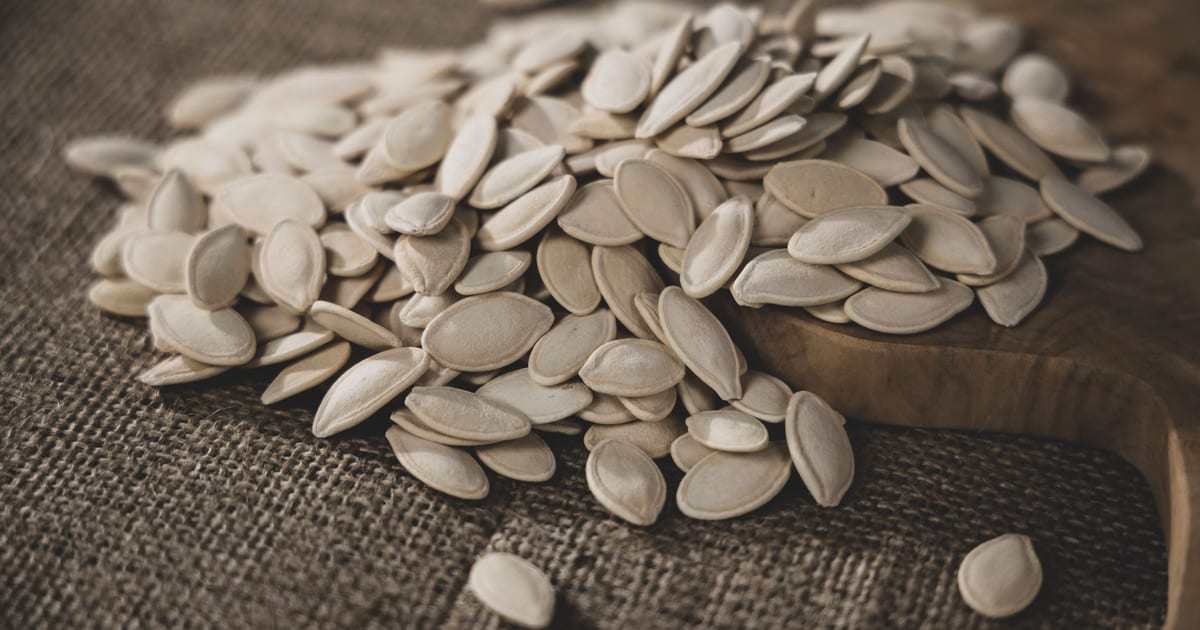
The best evidence favors whole pumpkin seeds, not the oil or extract: in a 12-month trial of 1,431 men, 10 g of seed a day beat placebo, while a pumpkin seed extract did not.1 Pumpkin seed oil has only small trials, and in one it worked less well than tamsulosin.2
Most pages that rank for this question sell pumpkin seed oil capsules or extracts. That is worth knowing before you read them, because the single largest pumpkin seed trial ever run found the opposite of what those products imply. Every study below is linked so you can check the numbers yourself.
Key takeaways
- The GRANU trial randomized 1,431 men aged 50 to 80 for 12 months to pumpkin seed (5 g twice a day), a pumpkin seed extract (500 mg twice a day) or placebo.1
- Responders (symptom score down 5 points or more): 58.5 percent on whole seed vs 47.3 percent on placebo. The extract did not differ from placebo.1
- In a 3-month trial of 73 men, pumpkin seed oil (360 mg twice a day) lowered the symptom score by 3.19 points, versus 5.33 on tamsulosin. There was no placebo group.2
- In a 12-month Korean trial of 47 men, pumpkin seed oil at 320 mg a day did not change prostate volume.3
- 10 g of dried pumpkin seed kernels is about 1 and a quarter tablespoons, based on USDA's weight of 129 g per cup.6
Why men try pumpkin seeds for the prostate
Pumpkin seed (Cucurbita pepo) is one of the oldest folk remedies for urinary symptoms in older men, and it is sold today as whole seeds, cold-pressed oil, dry extracts and as one ingredient in prostate blends. The symptoms people hope it helps are the classic ones of benign prostatic hyperplasia (BPH): a weak stream, urgency, frequent trips and waking at night, which our guide to enlarged prostate symptoms explains in full.
The question that matters for your shopping list is not "does pumpkin help?" but "which form, at what amount, and compared with what?" The trials answer those three questions differently, so we will take them one at a time.
The GRANU study: seeds beat placebo, the extract did not
GRANU (German Research Activities on Natural Urologicals) is the largest pumpkin seed trial we found. Researchers in Germany randomly assigned 1,431 men aged 50 to 80 with urinary symptoms suggestive of BPH to one of three groups for 12 months:1
- Pumpkin seed, 5 g twice a day (10 g a day)
- Pumpkin seed extract capsules, 500 mg twice a day
- Matching placebo
The main goal was a drop of at least 5 points on the International Prostate Symptom Score (IPSS) after 12 months. Here is what the published abstract reports:1
- Extract vs placebo: the response rate "did not differ."
- Whole seed vs placebo: 58.5 percent responders vs 47.3 percent. The authors describe the difference as "descriptively significant" and conclude that 12 months of pumpkin seed "led to a clinically relevant reduction in IPSS compared with placebo."
- Safety: the study products were well tolerated.
In plain numbers: 11 more men out of every 100 responded on seeds than on placebo. Put another way, about 9 men would need to eat the seeds for a year for one extra man to get a 5-point improvement. That is our arithmetic from the published percentages, not a figure from the paper.
The detail the sellers leave out. Most products in this category are oils and extracts. In the one large, long, placebo-controlled trial that tested both a seed and an extract side by side, it was the plain seed that separated from placebo, and the extract that did not.1
The limits of GRANU
The study was only partially blinded, and the authors themselves say the findings need to be "substantiated in a confirmatory study or systematic review" before a recommendation can be fully justified.1 Whole seeds are hard to disguise as a placebo, which matters when the outcome is men's own rating of their symptoms. Also note that 47.3 percent of men on placebo improved by 5 points or more, which shows how much symptoms can improve in a trial without any active product.1
Pumpkin seed oil: what the trials show
The oil trials are smaller and shorter, and none matches GRANU's size.
Pumpkin seed oil vs tamsulosin
A 2021 Iranian trial gave 73 men aged 50 and older either tamsulosin 0.4 mg at bedtime or pumpkin seed oil 360 mg twice a day for 3 months.2
- The symptom score fell in both groups: by 5.33 points on tamsulosin and 3.19 points on pumpkin seed oil at 3 months, a difference the authors found statistically significant.
- Peak flow, leftover urine, prostate volume and PSA did not change significantly in either group.
- No side effects were reported on the oil; on tamsulosin, dizziness (5.9 percent), headache (2.9 percent) and retrograde ejaculation (2.9 percent) occurred.
The authors' conclusion: pumpkin seed oil "relieved BPH symptoms with no side effects, but was not as effective as tamsulosin."2 The catch is that the trial had no placebo group and was single-blind, so it cannot tell how much of the 3-point drop the oil caused. For comparison, in GRANU almost half of the men on placebo improved by 5 points or more over a year.1
Pumpkin seed oil vs placebo
A Korean trial randomized 47 men (average age 53.3) to placebo, pumpkin seed oil 320 mg a day, saw palmetto oil 320 mg a day, or both oils together, for 12 months.3 Symptom scores fell within the pumpkin, saw palmetto and combination groups by 3 months, and peak flow in the pumpkin oil group improved significantly after 6 months, compared with each group's own starting point. Prostate volume did not change in any group, and the combination of both oils improved none of the measures significantly.3 With roughly a dozen men per group, this is a pilot-sized study.
Pumpkin seed extracts
Besides the GRANU extract arm, which did not beat placebo, two industry-linked studies of other extracts are often cited:
- A single-arm German study followed 130 men taking a pumpkin seed soft extract in routine practice. In the 83 men analyzed at 12 months, the IPSS fell by an average of 4.7 points. Two authors were employees of the manufacturer, and there was no comparison group.4
- A 3-month, single-arm pilot of an oil-free pumpkin seed extract in 60 men reported a 30.1 percent drop in the IPSS. Several authors were employees of companies involved with the extract, and again there was no placebo.5
Without a placebo group, a falling score is hard to interpret. In GRANU, almost half of the men on placebo reached a 5-point improvement.1
Seeds vs oil vs extract: the evidence side by side
| Form and daily amount | Study | Compared with | What it found | Evidence level |
|---|---|---|---|---|
| Whole seed, 10 g (5 g twice) | GRANU, 1,431 men, 12 months1 | Placebo | 58.5% vs 47.3% responders | Large, long, partially blinded; needs confirmation |
| Seed extract, 1,000 mg (500 mg twice) | GRANU, same trial1 | Placebo | No difference from placebo | Large, long |
| Seed oil, 720 mg (360 mg twice) | Iran, 73 men, 3 months2 | Tamsulosin | Score down 3.19 vs 5.33 on tamsulosin | Small, single-blind, no placebo |
| Seed oil, 320 mg | Korea, 47 men in 4 groups, 12 months3 | Placebo | Scores fell from baseline; no change in prostate volume | Very small |
| Soft extract (amount per product) | Germany, 130 men, up to 24 months4 | No comparison group | IPSS down 4.7 at 12 months | Observational, maker-linked |
| Oil-free extract, once daily | 60 men, 3 months5 | No comparison group | IPSS down 30.1% | Pilot, maker-linked |
The pattern is familiar from other herbs: the bigger and better controlled the study, the smaller the effect. The previous American Urological Association guideline (2021, amended 2023) notes that many supplement studies suffer from shortcomings such as being single center, short, poorly placebo-controlled or using unconventional endpoints.8 For how pumpkin seed ranks next to other options, see our graded list of natural remedies for an enlarged prostate.
How many pumpkin seeds a day for the prostate?
If you want to copy the one trial that beat placebo, the amount is 10 g a day, split into 5 g twice a day.1 The GRANU abstract calls it pumpkin seed and does not say whether it was hulled, roasted or a particular variety, so treat the following as an approximation.
The USDA's FoodData Central lists dried pumpkin and squash seed kernels at 129 g per cup.6 A cup holds 16 tablespoons, so:
- 1 tablespoon of dried kernels weighs about 8 g.
- 10 g is about 1 and a quarter tablespoons a day, or a little under 2 teaspoons twice a day.
- That amount adds roughly 56 calories a day (USDA lists 559 kcal per 100 g).6
Roasted unsalted kernels are a little lighter, about 118 g per cup in the same database, so 10 g is closer to 1 and a third tablespoons.6 A kitchen scale settles it in one weighing. If you buy salted seeds, count the salt; our list of foods to avoid with an enlarged prostate covers what else to watch.
What dose of pumpkin seed oil matches the studies?
There is no single studied dose. The oil trials above used 320 mg a day and 720 mg a day (360 mg twice).2,3 Neither used a placebo design large enough to show the oil works, so matching their dose tells you what was tested, not what is proven. Do not assume a "pumpkin seed oil 1,000 mg" capsule is a stronger version of the GRANU seeds: 10 g of seed and a 1-gram capsule of oil are different products, and the extract tested in GRANU did not beat placebo.1
Does pumpkin seed shrink the prostate?
Not in the trials that measured it. Prostate volume did not change on pumpkin seed oil in the 12-month Korean trial, or in the 3-month comparison with tamsulosin.3,2 If pumpkin seed helps, it appears to be through symptoms, not size. Our guide to whether an enlarged prostate can shrink covers what does change volume.
Pumpkin seeds, beta-sitosterol and zinc
Two nutrients often get credit for pumpkin seed's effect. Plant sterols are one; our review of beta-sitosterol for the prostate shows what the sterol trials found on their own. Zinc is the other: USDA lists 7.81 mg of zinc per 100 g of dried kernels, so 10 g supplies about 0.8 mg.6 Whether zinc matters for the prostate, and how much is too much, is covered in our article on zinc for prostate health. None of the trials above tested which component, if any, does the work.
Pumpkin seed with saw palmetto or nettle
Many blends pair pumpkin seed with saw palmetto or stinging nettle root. In the small Korean trial, pumpkin seed oil plus saw palmetto oil improved none of the measures significantly.3 The 2023 Cochrane review of saw palmetto found more uncertainty about combinations with other plant extracts, with low-certainty evidence.7 For nettle on its own, see stinging nettle root for prostate. A blend is only as useful as the dose of each ingredient on its label.
How long to try it, and when to stop
GRANU measured its main result at 12 months.1 A practical approach is to score your symptoms with our IPSS score calculator before you start and again after 3 months, then at 12 months. A drop of about 3 points is roughly what men notice as "slightly improved."9 Get checked first, and get care promptly if you have blood in your urine, cannot urinate, or have fever with urinary symptoms. The AUA's 2026 guideline says "behavioral and lifestyle interventions should be explored before or alongside pharmacologic treatment."10 Do not stop or change a prescribed medicine without your doctor.
Where a supplement fits
Pumpkin seed is one of the few prostate remedies you can test as plain food, at a low cost, using the exact amount from the largest trial. That makes it a sensible first experiment for a man whose checkup is clean. If you are looking at a supplement instead, check whether pumpkin seed is on the label at all, in what form and at what amount. Our guide on how to read a prostate supplement label shows how to do that in about a minute.
ProtoFlow does not list pumpkin seed on its label, so it is not a way to follow the GRANU trial. For that, 10 g of plain seeds a day is the closer match.
It is a 14-ingredient formula with 84.5 mg of saw palmetto, about a quarter of the trial dose, and mostly herbs sold for male vitality such as epimedium, damiana and tribulus. Its maker says it "supports the normal functions of the bladder, prostate and reproductive system".
Our review checks every ingredient on its label against the research and explains the refund terms.
A practical plan for this week
- Today: take the IPSS and write the total down with the date.
- Buy plain pumpkin seed kernels and weigh 10 g once, so you know what your daily amount looks like in your spoon.
- Split it: about 5 g with breakfast and 5 g with dinner, as in GRANU.
- Change nothing else for 3 months so you can tell whether it made a difference, then score yourself again.
- Anytime: if you cannot urinate, see blood in your urine or have fever with urinary symptoms, get care now.
Frequently asked questions
Is pumpkin seed oil good for an enlarged prostate?
The evidence is limited. In a 3-month trial of 73 men, pumpkin seed oil lowered symptom scores by 3.19 points, less than the 5.33 points seen with tamsulosin, and there was no placebo group. A 12-month Korean trial of 47 men was too small to be conclusive. The largest trial, GRANU, found that whole seeds beat placebo while a pumpkin seed extract did not.
How many pumpkin seeds should I eat a day for my prostate?
The GRANU trial, the largest study, used 10 grams of pumpkin seed a day, given as 5 grams twice a day. Based on USDA data of 129 grams per cup of dried kernels, 10 grams is about 1 and a quarter tablespoons. Weighing it once on a kitchen scale is the easiest way to get it right.
Are pumpkin seeds better than pumpkin seed oil for BPH?
In the one large trial that compared forms, yes. GRANU gave 1,431 men either whole pumpkin seed, a pumpkin seed extract or placebo for 12 months. 58.5 percent responded on seeds versus 47.3 percent on placebo, while the extract did not differ from placebo. The authors said the finding still needs confirmation.
What is the dose of pumpkin seed oil for BPH?
There is no established dose. Trials used 320 milligrams a day and 360 milligrams twice a day. Neither was large enough, or placebo-controlled enough, to show that the oil itself works, so these doses describe what was tested rather than a proven amount.
Does pumpkin seed shrink the prostate?
Not in the studies that measured it. Prostate volume did not change on pumpkin seed oil in a 12-month Korean trial or in a 3-month trial against tamsulosin. Any benefit seen in trials was in symptom scores, not in prostate size.
How long does pumpkin seed take to work for the prostate?
The GRANU trial measured its main result after 12 months. Smaller studies reported changes in symptom scores within 3 months, but those studies lacked a strong placebo comparison. Scoring your symptoms before starting and again at 3 and 12 months is a practical way to judge it.
Are pumpkin seeds safe to eat every day?
In the GRANU trial, 10 grams of pumpkin seed a day for 12 months was well tolerated. That amount adds about 56 calories a day based on USDA data. People with a seed allergy, or who need to limit salt, should choose accordingly and ask a doctor if unsure.
Sources
- Vahlensieck W, Theurer C, Pfitzer E, et al. Effects of pumpkin seed in men with lower urinary tract symptoms due to benign prostatic hyperplasia in the one-year, randomized, placebo-controlled GRANU study. Urologia Internationalis. 2015;94(3):286-295. https://pubmed.ncbi.nlm.nih.gov/25196580/
- Zerafatjou N, Amirzargar M, Biglarkhani M, et al. Pumpkin seed oil (Cucurbita pepo) versus tamsulosin for benign prostatic hyperplasia symptom relief: a single-blind randomized clinical trial. BMC Urology. 2021;21:147. Open access. https://pmc.ncbi.nlm.nih.gov/articles/PMC8527717/
- Hong H, Kim CS, Maeng S. Effects of pumpkin seed oil and saw palmetto oil in Korean men with symptomatic benign prostatic hyperplasia. Nutrition Research and Practice. 2009;3(4):323-327. Open access. https://pmc.ncbi.nlm.nih.gov/articles/PMC2809240/
- Theil G, Richter M, Schulze M, et al. Extract from Cucurbita pepo improves BPH symptoms without affecting sexual function: a 24-month noninterventional study. World Journal of Urology. 2022;40(7):1769-1775. https://pubmed.ncbi.nlm.nih.gov/35622117/
- Leibbrand M, Siefer S, Schon C, et al. Effects of an oil-free hydroethanolic pumpkin seed extract on symptom frequency and severity in men with benign prostatic hyperplasia: a pilot study in humans. Journal of Medicinal Food. 2019;22(6):551-559. https://pubmed.ncbi.nlm.nih.gov/31017505/
- U.S. Department of Agriculture, FoodData Central. Seeds, pumpkin and squash seed kernels, dried (FDC ID 170556); roasted, without salt (FDC ID 170557). SR Legacy. Record 170556 via the official FoodData Central API. https://api.nal.usda.gov/fdc/v1/food/170556?api_key=DEMO_KEY
- Franco JV, Trivisonno L, Sgarbossa NJ, et al. Serenoa repens for the treatment of lower urinary tract symptoms due to benign prostatic enlargement. Cochrane Database of Systematic Reviews. 2023;6(6):CD001423. https://pubmed.ncbi.nlm.nih.gov/37345871/
- American Urological Association. Management of Lower Urinary Tract Symptoms Attributed to Benign Prostatic Hyperplasia: AUA Guideline (2021, amended 2023), unabridged. Previous version, replaced on May 7, 2026. https://www.auanet.org/documents/Guidelines/PDF/2023%20Guidelines/BPH%20Unabridged%2002-20-24%20Final.pdf
- Barry MJ, Williford WO, Chang Y, et al. Benign prostatic hyperplasia specific health status measures in clinical research: how much change in the American Urological Association symptom index and the benign prostatic hyperplasia impact index is perceptible to patients? Journal of Urology. 1995;154(5):1770-1774. https://pubmed.ncbi.nlm.nih.gov/7563343/
- American Urological Association. Management of Lower Urinary Tract Symptoms Attributed to Benign Prostatic Hyperplasia: AUA Guideline (2026). Released May 7, 2026; replaces the 2021 guideline amended in 2023. https://www.auanet.org/2026BPHGuideline

About the author
Alice Hess is a health researcher and wellness writer at ProstateClarity. She is not a doctor, a nurse, a nutritionist or any kind of licensed clinician, and nothing here is medical advice. She started this work because of her father: at 76 he was getting up several times a night, and the research she did for him helped him get back to sleeping through the night. One man's story is not evidence, which is why every guide here is built on published research. She reads labels, primary research and regulatory limits, and publishes the numbers manufacturers leave out. More about her work and how these articles are researched.
Found an error? Write to contact@prostateclarity.com with the sentence and the source that contradicts it. Corrections are made in the article with the date noted.