Is Walking Good for an Enlarged Prostate? What the Studies Found
Affiliate disclosure: some links on this site are affiliate links. If you buy through them we may earn a commission at no extra cost to you. That never changes what the research says, and we publish negative findings about products we link to. This article is informational and is not medical advice.
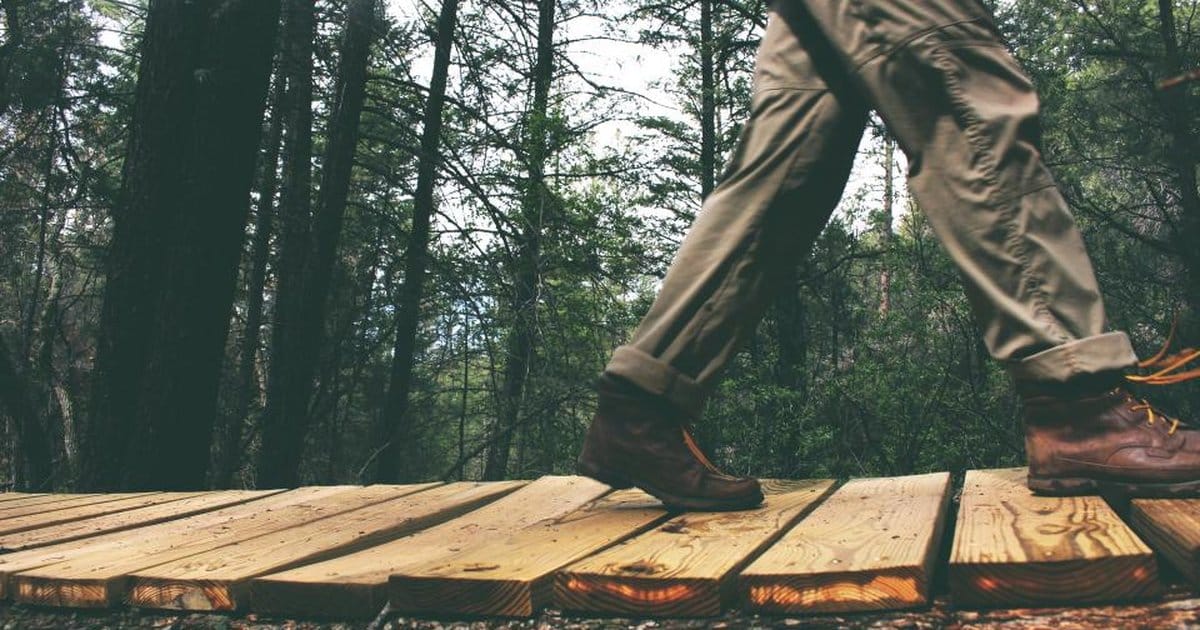
Probably yes, with one honest catch. In large studies, men who walked or exercised more had fewer prostate symptoms. In a Harvard cohort of U.S. men, walking 2 to 3 hours a week went with a 25 percent lower risk of BPH.1 The catch: these studies show an association, not proof that walking causes the drop.
Key takeaways
- In the Health Professionals Follow-up Study, men who walked 2 to 3 hours a week had a 25 percent lower risk of total BPH.1
- A 2008 meta-analysis reviewed 11 observational studies (43,083 men); pooling 8 of them, moderate activity went with about 26 percent lower odds of BPH or urinary symptoms (odds ratio 0.74).2
- In a U.S. screening trial, men active 1 hour a week or more were 13 percent less likely to report nocturia and 34 percent less likely to report severe nocturia, but activity did not predict new BPH diagnoses.3
- The federal target for adults is 150 minutes a week of moderate activity such as brisk walking, for example 30 minutes on 5 days, and short bouts count.7,8
- The American Urological Association's 2026 BPH guideline says behavioral and lifestyle steps should be explored before or alongside medication,13 and its previous version names increasing physical activity among them, as Expert Opinion rather than a trial-based grade.10
If your doctor has used the words "enlarged prostate," you were probably told to drink less at night and cut back on coffee. Walking comes up less often, even though the research on activity and prostate symptoms covers tens of thousands of men. That research is also weaker than many fitness pages pretend.
Below: what the studies measured, what they cannot tell you, how much to walk, and a four-week plan. If you are not yet sure your symptoms come from the prostate, start with our guide to enlarged prostate symptoms.
What did the studies find about walking and prostate symptoms?
BPH (benign prostatic hyperplasia) affects 5 to 6 percent of men aged 40 to 64 and 29 to 33 percent of men 65 and older, according to the NIDDK, which lists not being physically active among its risk factors, next to age, family history, obesity, type 2 diabetes and heart disease.6 Here is the research behind that line.
The Harvard study: walking 2 to 3 hours a week
The Health Professionals Follow-up Study followed U.S. men aged 40 to 75 from 1986. Researchers compared 1,890 men who had BPH surgery by 1994 and 1,853 men with significant urinary symptoms against 21,745 men with few or no symptoms.1
After adjusting for age, race, alcohol and smoking, the most active fifth of men had about 25 percent lower odds of total BPH than the least active fifth (odds ratio 0.75). Walking, the most common activity, held up on its own: men who walked 2 to 3 hours a week had a 25 percent lower risk of total BPH.1 Two to three hours a week is about 17 to 26 minutes a day.
The meta-analysis: 11 studies, 43,083 men
In 2008, urologists at UC San Diego pooled the observational studies on physical activity and BPH or lower urinary tract symptoms. Of 11 studies (43,083 men), 8 found fewer problems in more active men, 2 found no link and 1 was equivocal.2 Pooling 8 of them (35,675 men), the odds compared with sedentary men were:2
- Light activity: 0.70, but the range (0.44 to 1.13) was too wide to be statistically significant.
- Moderate activity: 0.74 (0.60 to 0.92), a significant drop of roughly a quarter.
- Vigorous activity: 0.74 (0.59 to 0.92), the same as moderate.
One detail is easy to miss: vigorous exercise did not beat moderate exercise. Effort at the level of a brisk walk did as well as hard training. Light activity pointed the same way, but that result could have been chance.
The studies that did not line up so neatly
A large analysis of the PLCO Cancer Screening Trial, in U.S. men aged 55 to 74, complicates the story.3 Among 28,404 men looked at once, activity was weakly linked to more of some BPH outcomes, not fewer. Among 4,710 men followed forward, activity did not predict new BPH diagnoses. It did predict nights: men active 1 hour a week or more were 13 percent less likely to report nocturia (waking 2 or more times) and 34 percent less likely to report severe nocturia (3 or more).3
A study of 1,723 U.S. twin pairs found that genes accounted for an estimated 72 percent of the risk of moderate to severe urinary symptoms. More active twins tended to have fewer symptoms (odds ratio 0.62), but the range crossed 1.0 (0.36 to 1.08), so the result was not significant.4 Walking works, if it works, on the part of the risk you can change.
The one small randomized trial
The closest thing to a walking experiment we found: 38 Brazilian men aged 50 to 59 with urinary symptoms, randomly split. Both groups were encouraged to be active; one also got a pedometer and a 10,000-step goal. After 12 weeks the pedometer group walked 9,753 steps a day against 6,212 and ended with lower International Prostate Symptom Scores (6.95 versus 10.16).5 Encouraging, and tiny: one center, no blinding, 12 weeks.
| Study | Design and size | What it found | Evidence level |
|---|---|---|---|
| Health Professionals Follow-up Study, 19981 | Observational, about 25,500 U.S. men aged 40 to 75 | Walking 2 to 3 h/week: 25% lower risk of total BPH | Moderate (large, adjusted, not randomized) |
| Parsons and Kashefi meta-analysis, 20082 | 11 observational studies, 43,083 men | Moderate or vigorous activity: odds ratio 0.74 | Moderate (pooled, all observational) |
| PLCO trial analysis, 20153 | Observational, 28,404 men (4,710 followed forward) | No link to new BPH; 13% less nocturia, 34% less severe nocturia | Moderate for nocturia, null for BPH |
| U.S. twin registry, 20064 | Observational, 1,723 twin pairs | Genes explained 72% of risk; activity trend not significant | Low for activity |
| Pedometer trial, 20215 | Randomized, 38 men aged 50 to 59, 12 weeks | More steps, lower symptom scores | Low (tiny, unblinded) |
Does walking cause fewer symptoms, or do healthier men just walk more?
An observational study watches what people already do. It cannot assign some men to walk and others to sit, so it cannot fully separate walking from what travels with it.
- Reverse causation. A man who needs a bathroom every 40 minutes may stop taking long walks. The PLCO authors named this: men may have reduced their activity because of their symptoms.3
- Recall bias. Activity was self-reported, and men may report it differently after a diagnosis.3
- Shared risk factors. Obesity, type 2 diabetes and heart disease raise BPH risk and are tied to how active a man is.6 Statistical adjustment is never perfect.
The 2008 meta-analysis concluded that "physical activity reduces the risks of BPH and LUTS," stronger causal language than observational data can strictly support.2 The NIDDK is more careful: "Researchers have not found a way to prevent BPH, but being physically active may help reduce your risk."6 That is the fair summary. Walking is cheap, low-risk and good for the heart, and the prostate data points the same way. That is a good basis for a habit, not proof of a treatment.
Why walking might help: the leading theory
The Harvard team started from one idea: part of what squeezes the urethra in BPH is the tone of the smooth muscle in the prostate, driven by the sympathetic ("fight or flight") nervous system. Activity lowers sympathetic activity, and higher sympathetic activity is associated with more muscle tone and more symptoms.1 The meta-analysis authors add a second route: BPH shares modifiable risk factors with heart disease.2 Both are plausible. Neither is confirmed.
How much should you walk for your prostate?
No prostate study set an ideal dose, so use the federal benchmark. The HHS Physical Activity Guidelines for Americans ask adults for 150 to 300 minutes a week of moderate activity, or 75 to 150 minutes of vigorous activity, plus muscle-strengthening on 2 or more days.7 The CDC puts it plainly: brisk walking for 150 minutes a week, for example 30 minutes a day, 5 days a week.8
The Harvard walkers who did best logged 2 to 3 hours a week, or 120 to 180 minutes.1 The federal minimum sits right inside that range. There is no separate "prostate dose."
How fast is brisk, and do short walks count?
HHS uses the talk test: at moderate intensity you can talk but not sing; at vigorous intensity you cannot say more than a few words without pausing for breath.7 Short walks count. The 2008 guidelines only counted bouts of 10 minutes or more; the 2018 edition dropped that rule because bouts of any length contribute to the benefit.7 For a man who needs to stay near a bathroom, three 10-minute walks may beat one 30-minute loop.
What if you are starting from zero?
On the HHS chart of activity against risk of death from any cause, the biggest gain comes from going from nothing to just 60 minutes a week.7 That matches the PLCO nocturia finding at 1 hour a week or more.3 Adults 65 and older should add balance training, and anyone whose health rules out 150 minutes should be as active as their abilities and conditions allow.7,9 HHS says healthy older adults who build up gradually generally do not need to see a clinician first, but those with chronic conditions should talk with one.7
What does the AUA guideline say about physical activity?
The American Urological Association updated its BPH guideline in May 2026, and its advice on habits is direct: "Behavioral and lifestyle interventions should be explored before or alongside pharmacologic treatment."13 The previous version (2021, amended 2023) spelled out what that means: limiting fluids before bed or travel, cutting caffeine and alcohol, avoiding constipation, increasing physical activity, weight loss, Kegel exercises at the moment of urgency, timed voiding and double voiding.10
One detail matters. In that previous version, the habits advice was graded Expert Opinion, based on the panel's clinical experience and judgment "for which there may or may not be evidence in the medical literature," and the guideline said studies comparing lifestyle changes with medical treatment "are lacking."10 Urologists endorse walking as a first step; nobody has run the head-to-head trial against medication.
Is cycling bad for the prostate? The saddle question
Many men would rather ride than walk, and many have heard that a bike seat "crushes the prostate." The best data we found on urinary symptoms is a University of California, San Francisco survey in The Journal of Urology (2018) that compared 3,932 men: low- and high-intensity cyclists against swimmers and runners.11
- Urinary symptoms: no significant differences in prostate symptom scores or chronic prostatitis scores.11
- Urethral stricture: cyclists had 2.5 times the odds of reporting one.11 A stricture is scar tissue in the urine channel, and MedlinePlus lists it among the causes of trouble starting urination.12
- Setup matters: standing more than 20 percent of the ride cut the odds of genital numbness (odds ratio 0.4), and a handlebar level with or above the saddle was linked to less numbness and fewer saddle sores.11
It was a one-time survey of volunteers recruited through Facebook ads and sports clubs, so it cannot prove cause.11 On what it shows, cycling does not appear to worsen prostate symptoms, while walking has more evidence behind it and no saddle to adjust. If your stream is already weak, our guide to a weak urine stream in men covers the causes besides the prostate.
What walking can and cannot do for urinary symptoms
What the evidence suggests walking can do
- Go along with a lower chance of bothersome BPH symptoms, in men who keep it up for years.1,2
- Go along with fewer nighttime bathroom trips, the most consistent PLCO finding.3 Our guide to how many times a night is normal to urinate covers the causes of nocturia walking will not touch.
- Fit the AUA's package of lifestyle steps, together with fluid timing and less evening caffeine and alcohol.10 Our guide to the best drinks for an enlarged prostate covers that half.
What walking cannot do
- It has not been shown to shrink the prostate. Most of these studies measured symptoms, surgery and diagnoses. The PLCO analysis also estimated prostate size by rectal exam, and activity did not predict new enlargement.3
- It cannot open a blocked outlet or a scarred urethra. A very weak stream or a bladder that never feels empty needs a diagnosis, not a step count.
- It does not replace treatment. There are no trials comparing lifestyle changes directly with medication.10 Do not stop or change a prescribed medicine without your doctor.
- It does not cover red flags. The NIDDK says to get care right away if you cannot urinate at all, have painful, frequent and urgent urination with fever and chills, see blood in your urine, or have great pain in your lower abdomen or urinary tract.6
If your symptoms are mild and a clinician has ruled out anything serious, walking is one of the few steps with no real downside. If you are also weighing a supplement, read the evidence first and treat it as an add-on to these habits, never a substitute for a checkup.
If your doctor has ruled out the red flags and you want to try a supplement that comes with a money-back guarantee, ProtoFlow is the one we analyzed in full. Its maker says it "supports the normal functions of the bladder, prostate and reproductive system". Our analysis checks that claim against the label, the published research and the refund terms.
A 4-week walking plan for men over 45
Before day 1, fill in the International Prostate Symptom Score, a validated self-administered questionnaire your doctor also uses, and note how many times you get up at night.10 Repeat both after week 4, so you know whether walking is doing anything for you.
- Week 1, about 60 minutes. 10 to 15 minutes on most days, at an easy talking pace, on routes with a bathroom nearby. Sixty minutes is where the HHS chart shows the biggest jump from doing nothing.7
- Week 2, about 90 minutes. 15 to 20 minutes a day, or two 10-minute walks. Speed up until you can talk but could not sing.7
- Week 3, about 120 minutes. Five days of about 25 minutes, plus 2 short strength sessions such as chair stands or wall push-ups.7 At 65 or older, add simple balance practice.9
- Week 4, 150 minutes. Thirty minutes on 5 days, the CDC benchmark,8 and inside the 2 to 3 hours a week the Harvard walkers logged.1
- Time your fluids. Drink normally through the day and less before bed or a long walk, as the NIDDK and the AUA advise.6,10
- Keep going after week 4. The studies describe men who stayed active for years, not a 30-day challenge.1,3
- Get checked if a red flag appears or symptoms are clearly worse after a month.6
Frequently asked questions
Is walking good for an enlarged prostate?
The evidence points that way, but it is observational. In the Health Professionals Follow-up Study, men who walked 2 to 3 hours a week had a 25 percent lower risk of BPH, and a 2008 meta-analysis that pooled 8 studies found moderate activity linked to about 26 percent lower odds of BPH or urinary symptoms. That is an association, not proof of cause.
How much should I walk for prostate health?
No study has set a prostate-specific dose. The practical target is the federal guideline: at least 150 minutes a week of moderate activity such as brisk walking, for example 30 minutes on 5 days, plus strength work on 2 days. If you are starting from zero, 60 minutes a week is a meaningful first step.
Can walking shrink an enlarged prostate?
There is no good evidence that it does. Most activity studies measured symptoms, surgery and diagnoses, not size. In the PLCO analysis, which also estimated prostate size by rectal exam, activity did not predict new enlargement. The leading theory is that activity lowers the nerve-driven muscle tone in the prostate, which would ease symptoms without changing the size of the gland.
Does walking help with waking up at night to pee?
It may. In the PLCO screening trial, men active 1 hour a week or more were 13 percent less likely to report nocturia and 34 percent less likely to report severe nocturia. Nocturia has many causes besides the prostate, such as sleep apnea and evening fluids, so walking will not fix all of them.
Is running better than walking for the prostate?
Not according to the pooled data. In the 2008 meta-analysis, moderate and vigorous activity both had an odds ratio of 0.74 for BPH or urinary symptoms compared with sedentary men. For most men over 45, walking is also easier to keep up for years, which is what the long-term studies measured.
Is cycling bad for the prostate?
Probably not for urinary symptoms. A 2018 survey of 3,932 men in The Journal of Urology found no significant difference in prostate symptom scores between cyclists and swimmers or runners. Cyclists did have 2.5 times the odds of urethral stricture, and a higher handlebar was linked to less genital numbness.
Can I walk instead of taking my prostate medication?
Do not stop or change a prescribed medicine without your doctor. The AUA's 2026 guideline says lifestyle and behavioral steps, including physical activity, should be explored before or alongside medication, but no trial has compared them head to head with medical treatment. Treat walking as something you add to your plan.
Sources
- Platz EA, Kawachi I, Rimm EB, et al. Physical activity and benign prostatic hyperplasia. Archives of Internal Medicine. 1998;158(21):2349-2356. PMID 9827786. https://pubmed.ncbi.nlm.nih.gov/9827786/
- Parsons JK, Kashefi C. Physical activity, benign prostatic hyperplasia, and lower urinary tract symptoms. European Urology. 2008;53(6):1228-1235. PMID 18358592. https://pubmed.ncbi.nlm.nih.gov/18358592/
- Wolin KY, Grubb RL 3rd, Pakpahan R, et al. Physical activity and benign prostatic hyperplasia-related outcomes and nocturia. Medicine and Science in Sports and Exercise. 2015;47(3):581-592. https://pmc.ncbi.nlm.nih.gov/articles/PMC4342314/
- Rohrmann S, Fallin MD, Page WF, et al. Concordance rates and modifiable risk factors for lower urinary tract symptoms in twins. Epidemiology. 2006;17(4):419-427. PMID 16699472. https://pubmed.ncbi.nlm.nih.gov/16699472/
- Agostini LCM, Brum CS, Lopes HE, et al. Evaluation of pedometer use in men with lower urinary tract symptoms: a randomized clinical trial. International Urology and Nephrology. 2021;53(11):2231-2236. PMID 34390436. https://pubmed.ncbi.nlm.nih.gov/34390436/
- National Institute of Diabetes and Digestive and Kidney Diseases (NIH). Prostate Enlargement (Benign Prostatic Hyperplasia). https://www.niddk.nih.gov/health-information/urologic-diseases/prostate-problems/prostate-enlargement-benign-prostatic-hyperplasia
- U.S. Department of Health and Human Services. Physical Activity Guidelines for Americans, 2nd edition. 2018. https://odphp.health.gov/sites/default/files/2019-09/Physical_Activity_Guidelines_2nd_edition.pdf
- Centers for Disease Control and Prevention. Adult Activity: An Overview. https://www.cdc.gov/physical-activity-basics/guidelines/adults.html
- Centers for Disease Control and Prevention. Older Adult Activity: An Overview. https://www.cdc.gov/physical-activity-basics/guidelines/older-adults.html
- American Urological Association. Management of Lower Urinary Tract Symptoms Attributed to Benign Prostatic Hyperplasia: AUA Guideline (2021, amended 2023), unabridged. Previous version, replaced on May 7, 2026. https://www.auanet.org/documents/Guidelines/PDF/2023%20Guidelines/BPH%20Unabridged%2002-20-24%20Final.pdf
- Awad MA, Gaither TW, Murphy GP, et al. Cycling, and male sexual and urinary function: results from a large, multinational, cross-sectional study. The Journal of Urology. 2018;199(3):798-804. PMID 29031767. https://pubmed.ncbi.nlm.nih.gov/29031767/
- MedlinePlus Medical Encyclopedia (NIH National Library of Medicine). Urination - difficulty with flow. https://medlineplus.gov/ency/article/003143.htm
- American Urological Association. Management of Lower Urinary Tract Symptoms Attributed to Benign Prostatic Hyperplasia: AUA Guideline (2026), Parts I to III. Released May 7, 2026; replaces the 2021 guideline amended in 2023. https://www.auanet.org/2026BPHGuideline. Recommendations as quoted by Guideline Central: https://www.guidelinecentral.com/insights/may-2026-aua-lowerurinarytractsymptoms-guideline-video/

About the author
Alice Hess is a health researcher and wellness writer at ProstateClarity. She is not a doctor, a nurse, a nutritionist or any kind of licensed clinician, and nothing here is medical advice. She started this work because of her father: at 76 he was getting up several times a night, and the research she did for him helped him get back to sleeping through the night. One man's story is not evidence, which is why every guide here is built on published research. She reads labels, primary research and regulatory limits, and publishes the numbers manufacturers leave out. More about her work and how these articles are researched.
Found an error? Write to contact@prostateclarity.com with the sentence and the source that contradicts it. Corrections are made in the article with the date noted.