Can You Take Saw Palmetto With Tamsulosin, Finasteride or Blood Thinners?
Affiliate disclosure: some links on this site are affiliate links. If you buy through them we may earn a commission at no extra cost to you. That never changes what the research says, and we publish negative findings about products we link to. This article is informational and is not medical advice.
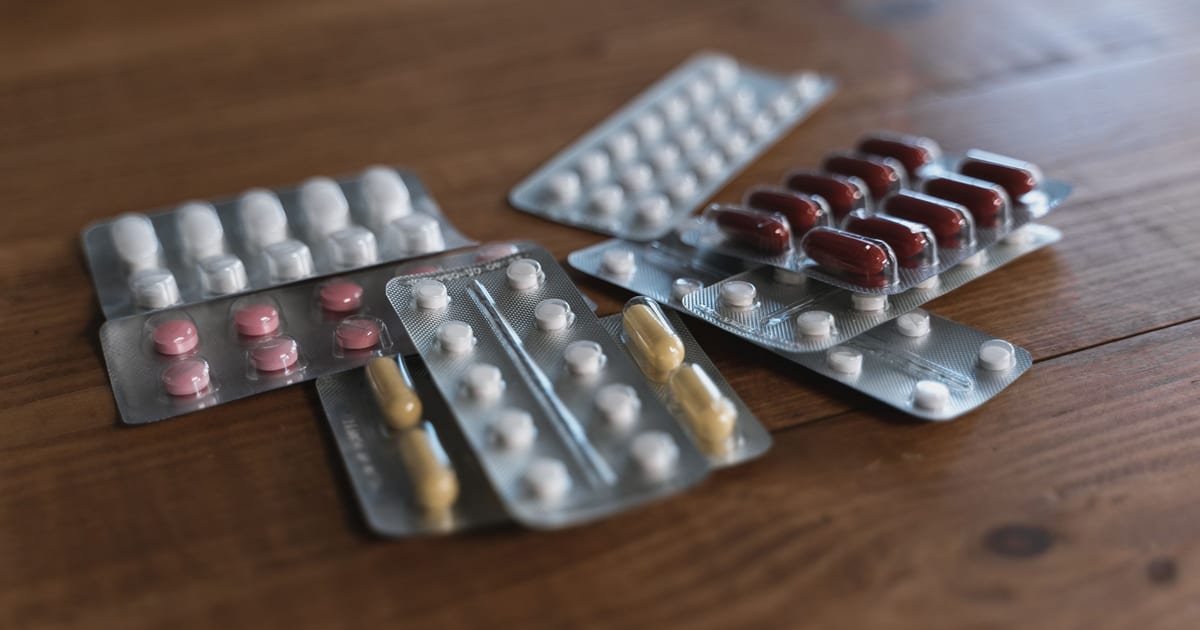
No harmful interaction between saw palmetto and tamsulosin has been documented, and two trials that combined them found no extra benefit over tamsulosin alone.4,5 With finasteride there is no combination trial. With warfarin, two case reports exist. Ask your doctor or pharmacist before combining any of them.1,7
This is the question of a man who already takes a prescription and is looking at the supplement aisle. The honest answer is different for each of the three medicines men over 50 most often ask about, so this guide takes them one at a time: what is recorded, what has actually been tested together, and what those tests found. If you are still sorting out what your symptoms mean, start with our guide to enlarged prostate symptoms.
Key takeaways
- In the OCOS trial, 329 men took tamsulosin with or without saw palmetto for 52 weeks: symptom scores fell 5.2 and 6.0 points, a difference that was not significant.5
- Saw palmetto at 320 mg a day for 14 days did not change the activity of the liver enzymes CYP2D6 and CYP3A4 in 12 healthy volunteers.6
- Finasteride and dutasteride lower PSA by about 50 percent; saw palmetto did not change PSA more than placebo even at 960 mg a day.9,10
- One case report describes a man on warfarin whose INR rose from 2.4 to 3.4 after a saw palmetto product; a 2014 review rated the interaction "doubtful."7
- If a blend lists ginkgo, note the NCCIH warning: ginkgo may raise bleeding risk with warfarin.3
What do official sources say about saw palmetto interactions?
Less than you might expect. The National Center for Complementary and Integrative Health (NCCIH) says saw palmetto is well tolerated, has been used safely in studies for up to 3 years, and has mild, infrequent side effects such as digestive symptoms, dizziness and headache. It does not list a specific drug interaction. Its general advice: "If you take any type of medicine, talk with your health care provider before using any herbal product; some herbs and medicines interact in harmful ways."1
"No interaction listed" is not the same as "no interaction possible." It mostly means few combinations have been studied. That is why the useful question is not "is it dangerous?" but "has anyone tested this pair, and what did they find?" The table below answers that for the three medicines men ask about most.
Saw palmetto with prostate medicines and blood thinners: the evidence side by side
| Medicine | Interaction recorded? | Tested together? | What the studies showed | Level of evidence |
|---|---|---|---|---|
| Tamsulosin (Flomax) and other alpha blockers | None documented in the sources we checked | Yes: two randomized trials | No added benefit from saw palmetto; no difference in safety in the larger trial | Moderate (randomized trials, one large)4,5 |
| Finasteride or dutasteride | None documented | No combination trial found | Saw palmetto is described as a possible "weak surrogate" of these drugs; PSA effects differ sharply | Low (no direct test)2,9,10 |
| Warfarin and other blood thinners | Case reports only | No controlled study | One INR rise from 2.4 to 3.4; one case of surgical bleeding; enzyme study found no effect on two major pathways | Very low; rated "doubtful" in a 2014 review6,7,8 |
| Ginkgo (if a blend lists it) | Yes: NCCIH bleeding warning with warfarin | Not applicable | The concern is the ginkgo, not the saw palmetto | Official warning3 |
Can you take saw palmetto with tamsulosin (Flomax)?
This pair has actually been tested, twice.
The OCOS trial (France, 2002)
A double-blind trial randomized 329 men with moderate to severe symptoms (IPSS of 13 or more) to tamsulosin 0.4 mg once a day plus either saw palmetto 160 mg twice a day or a placebo, for 52 weeks. Symptom scores improved by 5.2 points with tamsulosin alone and 6.0 points with the combination, a difference that was not statistically significant (p = 0.286). Flow rate, quality of life and safety did not differ either. The authors concluded that adding saw palmetto "did not provide any significant benefit."5
A smaller Turkish study (2007)
Sixty men were split into three groups of 20: saw palmetto 320 mg a day, tamsulosin 0.4 mg a day, or both. The groups did not differ in flow improvement or symptom score improvement, and the authors wrote that the combination "does not provide extra benefits." No adverse effect was detected in the saw palmetto group.4 Twenty men per group is too small to prove safety, so read this as a hint, not a guarantee.
What this means for you
The combination does not look dangerous in these trials, but it also did not add anything. Putting the 0.8-point difference from OCOS next to the roughly 3-point change men can feel on the IPSS puts it in perspective.5,11 Side effects of tamsulosin itself, such as dizziness and ejaculation problems, came up in saw palmetto studies that used tamsulosin as a co-treatment, which the 2023 Cochrane review notes are typical of alpha blockers.2 If you are on tamsulosin and feel dizzy, that is more likely the tamsulosin. Our guide to natural alternatives to Flomax covers the options that have been compared with it directly.
Can you take saw palmetto and finasteride together?
We did not find a randomized trial that tested saw palmetto added to finasteride or dutasteride for an enlarged prostate. Two facts matter instead.
They are thought to work on the same pathway
The 2023 Cochrane review lists, among saw palmetto's proposed mechanisms, acting as "a weak surrogate 5-ARI inhibiting the conversion of testosterone to dihydrotestosterone."2 Finasteride and dutasteride are 5-alpha reductase inhibitors (5-ARIs), the drug class that the guideline describes as shrinking the prostate.9 In other words, saw palmetto is proposed to be a weak version of a medicine you would already be taking at full strength, and no trial shows that adding it helps.
The PSA catch
This is the part most pages get wrong. The AUA guideline (previous version, 2021, amended 2023) explains that 5-ARIs shrink the prostate and lower serum PSA by approximately 50 percent, so the measured PSA of a man on a 5-ARI should be doubled when it is used to track the prostate or screen for cancer.9 Saw palmetto does not do this. In the CAMUS trial, 369 men over 45 took placebo or saw palmetto at rising doses of 320, 640 and then 960 mg a day for 72 weeks. PSA changed by 0.16 ng/mL on placebo and 0.23 ng/mL on saw palmetto, a difference that was not significant.10 The NCCIH agrees that saw palmetto does not appear to affect PSA readings, even at higher-than-usual amounts.1
So if someone tells you saw palmetto "lowers PSA like finasteride," the trial says otherwise. The practical point: tell whoever orders your PSA test about every prostate medicine and supplement you take. Our guide to PSA testing by age explains how results are read.
Is saw palmetto safe with blood thinners?
Here the evidence is thin in both directions.
The case reports
A 2014 review of herb and warfarin interactions found two reports involving saw palmetto. In one, the INR of a 61-year-old man on warfarin rose modestly from 2.4 to 3.4 after he took a saw palmetto combination product, five tablets a day for six days. In the other, a 53-year-old man had excessive bleeding during surgery to remove a brain tumor.7 In that surgical case, published in 2001, his bleeding time was prolonged and returned to normal a few days after he stopped the herb.8
The lab and enzyme data
In test tubes, saw palmetto inhibits some liver enzymes that clear drugs, including CYP2C9. But the review notes that clinical studies found no clinically relevant effect, and it rated the saw palmetto and warfarin interaction Level IV, "doubtful," the lowest of its four levels.7 In one of those clinical studies, 12 healthy volunteers took 320 mg a day for 14 days with no change in the activity of CYP2D6 or CYP3A4, two enzyme pathways that many common medicines depend on. The authors called it only an initial investigation.6
What this means for you
A "doubtful" rating is not a green light. Warfarin is a drug with a narrow therapeutic index, which makes interactions a major safety concern,12 and two case reports cannot rule out a rare effect. If you take warfarin, apixaban, clopidogrel or daily aspirin, talk to the doctor who manages it before you add any supplement. Tell your surgeon and anesthesia team about every supplement before any operation; the authors of the surgical case report urged doctors to ask about them.8
The ingredient most people overlook: ginkgo
Some prostate products are not single-herb saw palmetto but blends of several ingredients, and then the bleeding question can come from a different line on the label. The NCCIH states that "Ginkgo may increase the risk of bleeding in people who are taking anticoagulant drugs, such as warfarin," and that it may interact with other drugs.3 If you take a blood thinner and the label lists ginkgo, that is the ingredient to raise with your doctor first.
The same logic applies to every blend: each added herb is one more interaction to check. Our guide on how to read a prostate supplement label shows how to list every ingredient and dose in about a minute, so you can hand that list to your pharmacist.
Questions to ask your doctor or pharmacist
- Is there any reason this supplement could interfere with my current medicines? (Bring the full label, not just the product name.)
- If I take warfarin: should my INR be checked sooner after I start it?
- If I take finasteride or dutasteride: will you account for that when you read my PSA?
- Do I have surgery or a procedure coming up where I should mention it?
- How will we know if it is working? (Agree on a symptom score before and after.)
Also check the rest of your medicine cabinet. Cold and allergy products are a more common source of urinary trouble than saw palmetto; see cold and allergy medicine with an enlarged prostate. Do not stop or change a prescribed medicine without your doctor.
Does saw palmetto work well enough to be worth the question?
Before weighing interactions, weigh the benefit. The 2023 Cochrane review pooled 27 studies with 4,656 men and concluded that saw palmetto "alone provides little to no benefits" for urinary symptoms from an enlarged prostate. In the most reliable studies, it lowered symptom scores by 0.90 points more than placebo at 3 to 6 months. There was more uncertainty about combinations with other plant extracts.2 The NCCIH summarizes the same review: little or no benefit when used alone.1
For comparison, about 3 points is the smallest drop men notice on the IPSS.11 If you decide to try it anyway, our saw palmetto dosage guide shows the amounts the trials used, our article on how long saw palmetto takes to work covers when to judge it, and prostate supplements vs medication compares the categories side by side.
Where a supplement fits
For a man already on a prostate medicine, a supplement is an add-on, never a swap, and the trials above suggest the add-on rarely adds much. If your doctor agrees it is safe with your prescriptions, choose a product whose label lists every ingredient with its dose, check each one against your medicine list, and judge it by your symptom score after about 12 weeks. No supplement treats, cures or prevents BPH.
ProtoFlow is a 14-ingredient formula, not a single herb: besides 84.5 mg of saw palmetto a day, it contains herbs sold for male vitality such as epimedium, damiana and muira puama. Each extra ingredient is one more thing to check against your prescriptions.
Its maker says it "supports the normal functions of the bladder, prostate and reproductive system". Before trying it with tamsulosin, finasteride, dutasteride or a blood thinner, take the full label to your doctor or pharmacist.
Our review lists every ingredient and dose so you can do that check.
Frequently asked questions
Can you take saw palmetto with tamsulosin?
No harmful interaction has been documented, and two trials have combined them. In the larger one, 329 men took tamsulosin with saw palmetto or placebo for 52 weeks, and the combination added no significant benefit and showed no difference in safety. Ask your doctor or pharmacist before combining them, since the combination also did not help more.
Can you take saw palmetto and finasteride together?
No trial has tested the combination for an enlarged prostate. Saw palmetto is thought to act as a weak version of the same enzyme blockade that finasteride produces at full strength, so there is little reason to add it. Finasteride lowers PSA by about half and saw palmetto does not, so tell your doctor about both before a PSA test.
Does saw palmetto thin your blood?
The evidence is weak. There are case reports of a raised INR in a man on warfarin and of excessive bleeding during brain surgery, but a 2014 review rated the saw palmetto and warfarin interaction as doubtful. Because warfarin has a narrow therapeutic index, talk to the doctor who manages your blood thinner before starting saw palmetto.
Does saw palmetto affect PSA test results?
Not in the best trial. In the CAMUS trial, 369 men took placebo or saw palmetto at doses up to 960 mg a day for 72 weeks, and PSA changed the same in both groups. The NCCIH says saw palmetto does not appear to affect PSA readings. Finasteride and dutasteride, by contrast, lower PSA by about 50 percent.
Does saw palmetto interact with other medications?
Few interactions are documented. In a study of 12 volunteers, 320 mg a day for 14 days did not change two major liver enzymes that clear many drugs. The NCCIH still advises anyone taking medicine to talk with a health care provider before using any herbal product, because some herbs and medicines interact in harmful ways.
Should I stop saw palmetto before surgery?
Tell your surgeon and anesthesia team that you take it and follow their instructions. A 2001 case report described severe bleeding during surgery in a man taking saw palmetto, with a prolonged bleeding time that returned to normal a few days after he stopped. The authors urged doctors to ask every patient about supplements.
Is ginkgo in a prostate supplement a problem with blood thinners?
It can be. The NCCIH warns that ginkgo may increase the risk of bleeding in people who take anticoagulant drugs such as warfarin. If you take a blood thinner, read the full ingredient list of any blend and show it to your doctor or pharmacist before you start.
Sources
- National Center for Complementary and Integrative Health (NIH). Saw Palmetto: Usefulness and Safety (last updated April 2025). https://www.nccih.nih.gov/health/saw-palmetto
- Franco JVA, Trivisonno L, Sgarbossa NJ, et al. Serenoa repens for the treatment of lower urinary tract symptoms due to benign prostatic enlargement. Cochrane Database of Systematic Reviews. 2023;6(6):CD001423. https://pmc.ncbi.nlm.nih.gov/articles/PMC10286776/
- National Center for Complementary and Integrative Health (NIH). Ginkgo (last updated February 2025). https://www.nccih.nih.gov/health/ginkgo
- Hizli F, Uygur MC. A prospective study of the efficacy of Serenoa repens, tamsulosin, and Serenoa repens plus tamsulosin treatment for patients with benign prostate hyperplasia. International Urology and Nephrology. 2007;39(3):879-886. https://pubmed.ncbi.nlm.nih.gov/17203353/
- Glemain P, Coulange C, Billebaud T, et al. Tamsulosin with or without Serenoa repens in benign prostatic hyperplasia: the OCOS trial. Progres en Urologie. 2002;12(3):395-403. https://pubmed.ncbi.nlm.nih.gov/12189745/
- Markowitz JS, Donovan JL, Devane CL, et al. Multiple doses of saw palmetto (Serenoa repens) did not alter cytochrome P450 2D6 and 3A4 activity in normal volunteers. Clinical Pharmacology and Therapeutics. 2003;74(6):536-542. https://pubmed.ncbi.nlm.nih.gov/14663456/
- Ge B, Zhang Z, Zuo Z. Updates on the Clinical Evidenced Herb-Warfarin Interactions. Evidence-Based Complementary and Alternative Medicine. 2014;2014:957362. https://pmc.ncbi.nlm.nih.gov/articles/PMC3976951/
- Cheema P, El-Mefty O, Jazieh AR. Intraoperative haemorrhage associated with the use of extract of Saw Palmetto herb: a case report and review of literature. Journal of Internal Medicine. 2001;250(2):167-169. https://pubmed.ncbi.nlm.nih.gov/11489067/
- American Urological Association. Management of Lower Urinary Tract Symptoms Attributed to Benign Prostatic Hyperplasia: AUA Guideline (2021, amended 2023), unabridged. Previous version, replaced on May 7, 2026. https://www.auanet.org/documents/Guidelines/PDF/2023%20Guidelines/BPH%20Unabridged%2002-20-24%20Final.pdf
- Andriole GL, McCullum-Hill C, Sandhu GS, et al. The effect of increasing doses of saw palmetto fruit extract on serum prostate specific antigen: analysis of the CAMUS randomized trial. Journal of Urology. 2013;189(2):486-492. https://pmc.ncbi.nlm.nih.gov/articles/PMC3979451/
- Barry MJ, Williford WO, Chang Y, et al. Benign prostatic hyperplasia specific health status measures in clinical research: how much change in the American Urological Association symptom index and the benign prostatic hyperplasia impact index is perceptible to patients? Journal of Urology. 1995;154(5):1770-1774. https://pubmed.ncbi.nlm.nih.gov/7563343/
- Milić N, Milošević N, Goločorbin Kon S, et al. Warfarin interactions with medicinal herbs. Natural Product Communications. 2014;9(8):1211-1216. https://pubmed.ncbi.nlm.nih.gov/25233607/

About the author
Alice Hess is a health researcher and wellness writer at ProstateClarity. She is not a doctor, a nurse, a nutritionist or any kind of licensed clinician, and nothing here is medical advice. She started this work because of her father: at 76 he was getting up several times a night, and the research she did for him helped him get back to sleeping through the night. One man's story is not evidence, which is why every guide here is built on published research. She reads labels, primary research and regulatory limits, and publishes the numbers manufacturers leave out. More about her work and how these articles are researched.
Found an error? Write to contact@prostateclarity.com with the sentence and the source that contradicts it. Corrections are made in the article with the date noted.