Stinging Nettle Root for Prostate: What the Trials Used and What the Labels Contain
Affiliate disclosure: some links on this site are affiliate links. If you buy through them we may earn a commission at no extra cost to you. That never changes what the research says, and we publish negative findings about products we link to. This article is informational and is not medical advice.
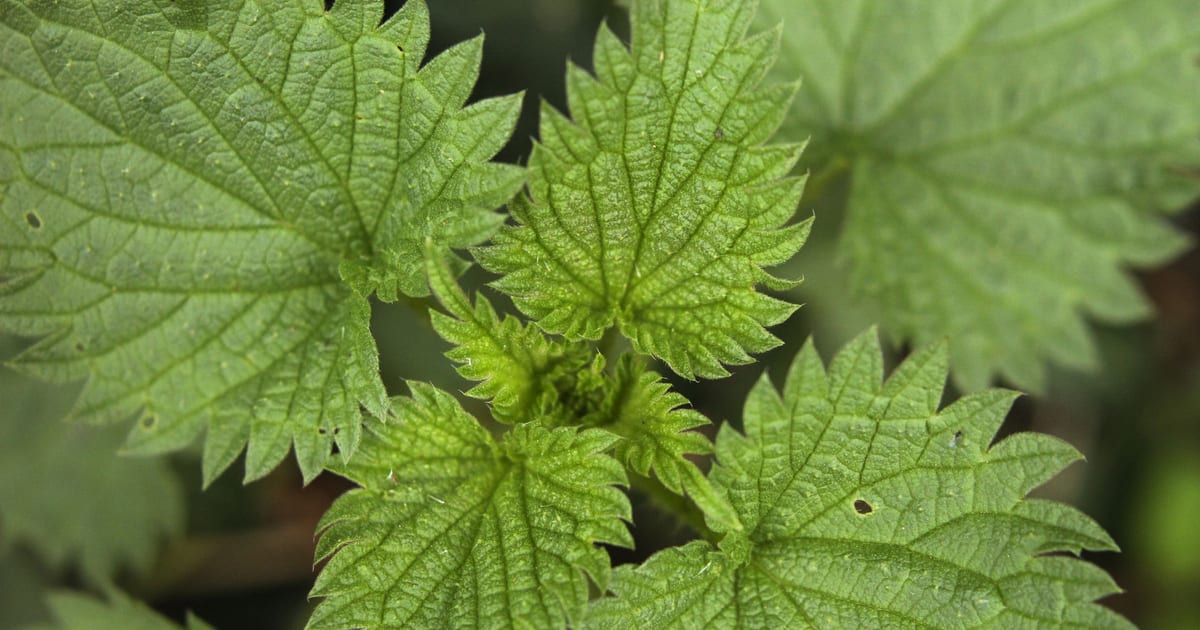
Stinging nettle root has modest and uneven evidence for enlarged prostate symptoms. In the strongest trial, 246 men for one year, the symptom score fell 5.7 points on nettle root and 4.7 on placebo, and urine flow did not improve.3 Europe accepts the root only as a traditional remedy, and the leaf is a different product.6,7
Nettle root shows up in a lot of prostate formulas, usually next to saw palmetto. This guide puts the trials side by side, explains why "nettle" on a label can mean two different plant parts, and compares the doses in those trials with what real labels contain. It is written for men who already have urinary symptoms from a likely enlarged prostate; if you are still sorting out what your symptoms mean, start with our guide to enlarged prostate symptoms.
Key takeaways
- In a one-year placebo trial of 246 men, nettle root lowered the symptom score by 5.7 points versus 4.7 on placebo; peak flow rose about the same in both groups (3.0 vs 2.9 mL per second).3
- The European Medicines Agency lists nettle root for prostate symptoms only as a traditional herbal medicine, based on long-standing use, with daily extract amounts of about 300 to 720 mg depending on the extract.6
- Nettle leaf has a different European indication: to increase the amount of urine. That is not what a man who gets up at night is looking for.7
- The often-cited "100-patient" nettle study is a two-page letter in which the placebo group's score moved from 27.854 to 27.853 in 8 weeks.1
- In four prostate formulas we checked in the NIH label database, nettle ranged from 30 mg of leaf powder to 300 mg of root extract per serving.11
What is stinging nettle root, and why is it in prostate formulas?
Stinging nettle (Urtica dioica) is a common weed whose leaves and roots have both been used as herbal medicines. For the prostate, the part that matters is the root. The European Medicines Agency (EMA), which reviews herbal medicines for the European Union, has a monograph on nettle root that covers one use: "relief of lower urinary tract symptoms related to benign prostatic hyperplasia after serious conditions have been excluded by a medical doctor."6
The wording that follows matters just as much. The EMA lists nettle root as a "traditional herbal medicinal product," which it defines as a product for use "exclusively based upon long-standing use." In the same monograph, the column for well-established use, the category that rests on published clinical evidence, is left empty.6 In plain terms: Europe accepts that men have used nettle root for these symptoms for a long time and that it appears safe enough, but it has not accepted the trial evidence as proof that it works.
Nettle root ended up in prostate formulas because it was studied in Germany and elsewhere for decades, often combined with saw palmetto. Our overview of natural remedies for an enlarged prostate grades it against the other common options.
Nettle root vs nettle leaf: why the label matters
This is the detail most product pages skip. The EMA has a separate monograph for nettle leaf, with two different traditional uses: relief of minor joint pain, and "to increase the amount of urine to achieve flushing of the urinary tract as an adjuvant in minor urinary complaints."7 The leaf monograph does not mention the prostate.
So the two parts point in different directions. The root is the one studied for prostate symptoms. The leaf is used to make you pass more urine, which is the last thing a man getting up two or three times a night wants. If nighttime urination is your main complaint, a product built on nettle leaf is a poor match on its own terms.
When you read a label, look for the plant part in parentheses: "(root)" or "(leaf)." In the NIH Dietary Supplement Label Database we found a prostate formula that lists 30 mg of nettle leaf powder per serving, next to three formulas that list root extract.11 If a label just says "stinging nettle" with no part named, you do not know which one you are buying.
What the nettle root trials found
Here are the main placebo-controlled studies, with their size, preparation, length and result. Each one is described below the table, including the problems.
| Study | Men | What they took | Length | What it showed | Main caveat |
|---|---|---|---|---|---|
| Schneider and Rübben, Germany, 20043 | 246 | 459 mg dry nettle root extract | 12 months | Symptom score down 5.7 vs 4.7 on placebo; no difference in peak flow | Small gap between groups |
| Safarinejad, Iran, 20052 | 620 randomized, 558 finished | Urtica dioica (dose not given in the abstract) | 6 months | Symptom score 19.8 to 11.8 vs 19.2 to 17.7 on placebo; prostate 40.1 to 36.3 cc | Single center and single author; large effects not repeated elsewhere |
| Ghorbanibirgani et al., Iran, 20131 | 100 | Nettle, 1,200 mg a day (plant part not stated) | 8 weeks | Score 26.5 to 2.1 vs no change on placebo | Two-page letter; results implausibly large |
| Lopatkin et al., Russia, 20054 | 257 | Saw palmetto 320 mg plus nettle root 240 mg a day | 24 weeks | Score down 6 vs 4 points on placebo | Combination, so nettle's share is unknown |
| Cochrane review, 20238 | 460 (4 studies) | Saw palmetto combined with other herbs | 12 to 24 weeks | "May result in little to no difference" | Low-certainty evidence |
The one-year German trial
The most careful single-herb study is the German multicenter trial of 246 men who took a 459 mg dry nettle root extract or placebo for a year. The symptom score (IPSS) fell from 18.7 to 13.0 on nettle root and from 18.5 to 13.8 on placebo, a difference the authors reported as statistically significant. Peak urine flow rose by 3.0 mL per second on nettle and 2.9 on placebo, which is no real difference, and leftover urine fell by a similar amount in both groups. The authors themselves wrote that "a strong increase of Q(max) or reduction of residual urine are not to be expected." Fewer adverse events were reported on nettle (29) than on placebo (38).3
A one-point gap on a 35-point scale is small. For context, the previous American Urological Association guideline treated a 3-point change in the IPSS as the minimal detectable difference when it judged prescription drugs.9
The large Iranian trial
The biggest study randomized 620 men to nettle or placebo for six months, then switched the placebo group to nettle and followed everyone up to 18 months. At six months, 81 percent of men on nettle reported improvement versus 16 percent on placebo. The score fell from 19.8 to 11.8 on nettle and from 19.2 to 17.7 on placebo, and peak flow rose by 8.2 versus 3.4 mL per second. Prostate size measured by ultrasound fell from 40.1 to 36.3 cc on nettle, with no change on placebo.2
Those results are much larger than the German trial's, and they come from a single center with a single listed author. The author's own conclusion was cautious: further trials "should be conducted to confirm these results before concluding that Urtica dioica is effective." The abstract does not give the daily dose or the plant part beyond the species name.2
The "100-patient study" many pages cite
A 2013 study from Ahvaz, Iran, is often quoted as a randomized trial of 100 men. It was published as a letter to the editor. Men took two 300 mg capsules twice a day (1,200 mg a day) of nettle or placebo for 8 weeks; the letter does not say whether the capsules contained root or leaf. The average symptom score on nettle fell from 26.5 to 2.1. On placebo it went from 27.854 to 27.853.1
Two things should make any reader cautious. A drop of more than 24 points in eight weeks is far beyond the average results of prescription drugs: across 10 trials of daily tadalafil, for example, the score fell 5.4 points on the drug and 3.6 on placebo.9 And placebo groups usually improve somewhat; in the two nettle trials above, the placebo score fell 4.7 and 1.5 points.2,3 A placebo group that moves by one thousandth of a point is unusual. We report the study because it circulates widely, not because it adds weight to the evidence.
Nettle root plus saw palmetto
Much of the nettle research tests a combination. In a Russian trial of 257 men, a capsule with 160 mg of saw palmetto extract and 120 mg of nettle root extract, taken twice a day, lowered the IPSS by 6 points versus 4 on placebo over 24 weeks.4 An open extension without a placebo group reported a 53 percent drop in score by week 96, but with everyone on the product, that number cannot separate the herbs from time and expectation.5
The 2023 Cochrane review pooled four placebo-controlled studies of saw palmetto combined with other herbs (460 men) and concluded the combinations "may result in little to no difference" in urinary symptoms, with low-certainty evidence. The same review found that saw palmetto alone "provides little to no benefits."8 If you are weighing the saw palmetto half of the pair, see saw palmetto vs pygeum and how long saw palmetto takes to work.
How strong is the evidence overall?
Weak to modest, and uneven. The previous AUA guideline named stinging nettle among popular supplement ingredients and said many of their studies "suffer from multiple shortcomings," listing short duration, single-center design, poorly chosen placebos and unconventional endpoints.9 The pattern above fits that description: the best-run trial found a small difference, and the largest effects come from studies that have not been repeated.
The 2026 AUA guideline, released May 7, 2026, puts the first step elsewhere: "Behavioral and lifestyle interventions should be explored before or alongside pharmacologic treatment."10 Fluid timing, caffeine and alcohol after dinner, and a medication review come before any herb.
Nettle root dosage: what was studied vs what labels contain
Dose is where nettle labels and nettle research drift apart. The EMA monograph lists several root preparations, each with its own daily amount, because extracts differ in strength.6
| Preparation | Daily amount | Source |
|---|---|---|
| Dry extract (7 to 14:1) | 450 to 480 mg; 600 mg in the first 3 months | EMA monograph |
| Dry extract (5.4 to 8.3:1) | 720 mg | EMA monograph |
| Dry extract (12 to 16:1) | 301 to 378 mg | EMA monograph |
| Root tea | 2 g of cut root in 150 mL water, 2 to 3 times a day | EMA monograph |
| One-year German trial | 459 mg dry root extract | Schneider 2004 |
| Russian combination trial | 240 mg root extract (with 320 mg saw palmetto) | Lopatkin 2005 |
On October 5, 2026, we opened four prostate formulas in the NIH Dietary Supplement Label Database that list nettle. Per serving, one listed 300 mg of root extract, one 66 mg of a 4:1 root extract, one 50 mg of root extract, and one 30 mg of leaf powder.11 Only the first comes near the amounts above. A label with 50 mg of nettle root may be fine as an ingredient, but it is not the dose that was tested.
Two label details help. First, the plant part, covered above. Second, the extract ratio (for example 4:1 or 16:1): it tells you how concentrated the extract is, and it is how the EMA separates one preparation's daily amount from another. Our guide on how to read a prostate supplement label walks through the rest, and our saw palmetto dosage guide applies the same method to saw palmetto.
Side effects and who should be careful
The EMA monograph lists stomach upset (nausea, heartburn, a feeling of fullness, gas, diarrhea) and allergic skin reactions as possible side effects, with unknown frequency. It lists no interactions with other medicines, says long-term use is possible, and contraindicates it only for people allergic to the plant.6 In the one-year German trial, adverse events were less common on nettle than on placebo.3
The monograph also carries a warning worth repeating: if symptoms get worse, or if fever, spasms, blood in the urine, painful urination or urinary retention appear, see a doctor.6 "No interactions reported" is not the same as "studied with every medicine," so tell your doctor or pharmacist about any herb you take, especially if you take prescription drugs. Do not stop or change a prescribed medicine without your doctor.
How to tell whether it is working for you
Measure, do not guess. Take the seven questions of our IPSS score calculator before you start and write the total down. The 2026 AUA guideline says men with these symptoms "should be re-evaluated within six months of treatment initiation, to assess response and treatment-related adverse effects."10 Apply the same discipline to a supplement: retake the score after 8 to 12 weeks and again before six months. If it has not dropped by about 3 points, the change you are seeing is probably within normal day-to-day variation.9
Change one thing at a time. If you start nettle root, cut evening caffeine and begin a new medicine in the same week, you will never know which one helped.
Where a supplement fits
A supplement comes after the checkup, not before it: a urinalysis, an exam and a PSA conversation rule out problems no herb should mask. If you then want to try nettle root, the evidence supports a modest expectation at best, the root and not the leaf, and an amount close to what was studied. A multi-ingredient formula should name each ingredient, its plant part and its amount, so you can match it against the trials above. No supplement treats, cures or prevents BPH. If you are also comparing seeds and oils, our guide to pumpkin seeds for the prostate covers the other common herb in these formulas, and our zinc guide covers the mineral most of them add.
ProtoFlow contains no nettle root, so it is not a way to try the herb at the amounts used in the trials above. Its only overlap with this page's research is saw palmetto, 84.5 mg a day, about a quarter of the 320 mg used in saw palmetto trials.
Most of the formula is herbs sold for male vitality, such as epimedium, damiana and tribulus. Its maker says it "supports the normal functions of the bladder, prostate and reproductive system".
Our review checks that claim against the full label, the published research and the refund terms.
A practical plan for this week
- Today: take the IPSS and write the total down.
- Check any bottle you own: is the nettle root or leaf, and how many milligrams per serving?
- Start with habits: move most fluids earlier in the day and cut caffeine and alcohol after dinner.
- Book the checkup if you have not had one, and bring your supplement list.
- If you try nettle root: change nothing else for 8 to 12 weeks, then retake the score.
Frequently asked questions
Does stinging nettle root help an enlarged prostate?
The evidence is modest and uneven. In the best-run trial, 246 men taking a nettle root extract for one year saw their symptom score fall 5.7 points versus 4.7 on placebo, with no difference in urine flow. A larger Iranian trial reported bigger benefits, but it has not been repeated. The European Medicines Agency accepts nettle root only as a traditional herbal medicine based on long-standing use.
How much nettle root should I take for BPH?
The European monograph lists daily amounts of about 300 to 720 mg of dry root extract, depending on the type of extract, or 2 grams of cut root brewed as tea two to three times a day. The one-year German trial used a 459 mg dry root extract. Many prostate formulas contain far less, sometimes 30 to 66 mg per serving.
What is the difference between nettle root and nettle leaf?
They are different herbal medicines. Nettle root is the part studied for prostate symptoms. Nettle leaf has European traditional uses for minor joint pain and to increase the amount of urine to flush the urinary tract, and its monograph does not mention the prostate. Check the label for the plant part in parentheses.
Can you take saw palmetto and nettle root together?
They are often combined. A Russian trial of 257 men found a saw palmetto and nettle root combination lowered the symptom score by 6 points versus 4 on placebo over 24 weeks. The 2023 Cochrane review, pooling four studies of saw palmetto combined with other herbs, concluded the combinations may make little to no difference, with low-certainty evidence.
Does nettle root shrink the prostate?
One Iranian trial reported prostate volume falling from 40.1 to 36.3 cc over six months, but that result has not been confirmed by other trials. In the one-year German trial the measurable benefits were small. No nettle study has the size or track record of the drug trials that showed prescription medicines can reduce prostate volume.
What are the side effects of stinging nettle root?
The European monograph lists stomach upset such as nausea, heartburn, fullness, gas and diarrhea, plus allergic skin reactions, with unknown frequency. It reports no drug interactions, but that does not mean it was tested with every medicine. See a doctor if urinary symptoms worsen or if you notice fever, blood in the urine, pain or trouble passing urine.
How long does nettle root take to work?
The trials ran from 8 weeks to 12 months, and the larger ones measured results at 6 to 12 months. A practical approach is to score your symptoms on the IPSS before starting and again after 8 to 12 weeks. If the score has not dropped by about 3 points, the change is probably within normal variation.
Sources
- Ghorbanibirgani A, Khalili A, Zamani L. The efficacy of stinging nettle (Urtica dioica) in patients with benign prostatic hyperplasia: a randomized double-blind study in 100 patients (letter). Iranian Red Crescent Medical Journal. 2013;15(1):9-10. https://pmc.ncbi.nlm.nih.gov/articles/PMC3589769/
- Safarinejad MR. Urtica dioica for treatment of benign prostatic hyperplasia: a prospective, randomized, double-blind, placebo-controlled, crossover study. Journal of Herbal Pharmacotherapy. 2005;5(4):1-11. https://pubmed.ncbi.nlm.nih.gov/16635963/
- Schneider T, Rübben H. Stinging nettle root extract in long-term treatment of benign prostatic syndrome: results of a randomized, double-blind, placebo-controlled multicenter study after 12 months (in German, English abstract). Der Urologe A. 2004;43(3):302-306. https://pubmed.ncbi.nlm.nih.gov/15045190/
- Lopatkin N, Sivkov A, Walther C, et al. Long-term efficacy and safety of a combination of sabal and urtica extract for lower urinary tract symptoms: a placebo-controlled, double-blind, multicenter trial. World Journal of Urology. 2005;23(2):139-146. https://pubmed.ncbi.nlm.nih.gov/15928959/
- Lopatkin N, Sivkov A, Schläfke S, et al. Efficacy and safety of a combination of Sabal and Urtica extract in lower urinary tract symptoms: long-term follow-up of a placebo-controlled, double-blind, multicenter trial. International Urology and Nephrology. 2007;39(4):1137-1146. https://pubmed.ncbi.nlm.nih.gov/18038253/
- European Medicines Agency, Committee on Herbal Medicinal Products. European Union herbal monograph on Urtica dioica L.; Urtica urens L., radix (nettle root), revision 1. EMA/HMPC/322646/2023. https://www.ema.europa.eu/system/files/documents/herbal-monograph/urticae-radix-mo_en.pdf
- European Medicines Agency, Committee on Herbal Medicinal Products. Community herbal monograph on Urtica dioica L.; Urtica urens L., folium (nettle leaf). https://www.ema.europa.eu/en/documents/herbal-monograph/final-community-herbal-monograph-urtica-dioica-l-urtica-urens-l-folium_en.pdf
- Franco JV, Trivisonno L, Sgarbossa NJ, et al. Serenoa repens for the treatment of lower urinary tract symptoms due to benign prostatic enlargement. Cochrane Database of Systematic Reviews. 2023;6(6):CD001423. https://pubmed.ncbi.nlm.nih.gov/37345871/
- American Urological Association. Management of Lower Urinary Tract Symptoms Attributed to Benign Prostatic Hyperplasia: AUA Guideline (2021, amended 2023), unabridged. Previous version, replaced on May 7, 2026. https://www.auanet.org/documents/Guidelines/PDF/2023%20Guidelines/BPH%20Unabridged%2002-20-24%20Final.pdf
- American Urological Association. Management of Lower Urinary Tract Symptoms Attributed to Benign Prostatic Hyperplasia: AUA Guideline (2026). Released May 7, 2026; replaces the 2021 guideline amended in 2023. https://www.auanet.org/2026BPHGuideline
- NIH Office of Dietary Supplements. Dietary Supplement Label Database (labels checked October 5, 2026). https://dsld.od.nih.gov/

About the author
Alice Hess is a health researcher and wellness writer at ProstateClarity. She is not a doctor, a nurse, a nutritionist or any kind of licensed clinician, and nothing here is medical advice. She started this work because of her father: at 76 he was getting up several times a night, and the research she did for him helped him get back to sleeping through the night. One man's story is not evidence, which is why every guide here is built on published research. She reads labels, primary research and regulatory limits, and publishes the numbers manufacturers leave out. More about her work and how these articles are researched.
Found an error? Write to contact@prostateclarity.com with the sentence and the source that contradicts it. Corrections are made in the article with the date noted.